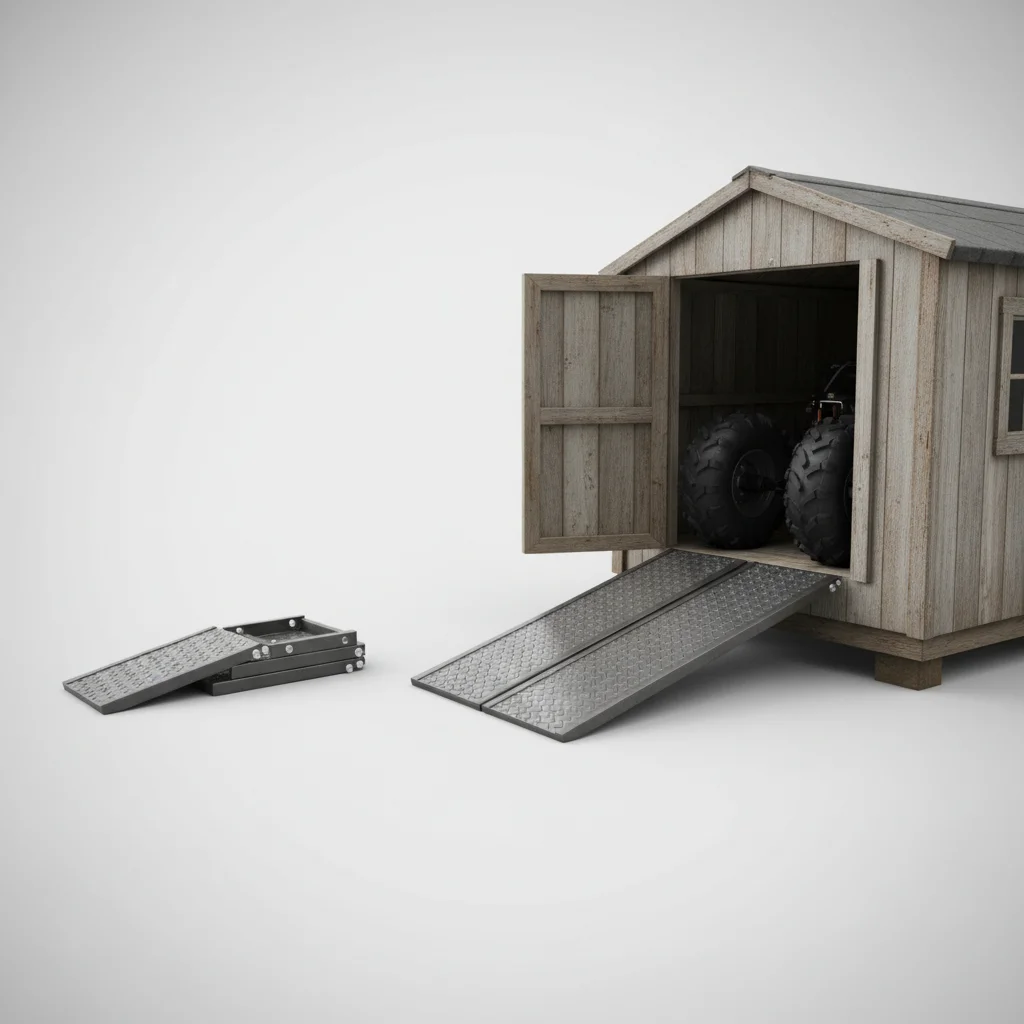
Storage shed ramps are a crucial accessory for anyone needing to move heavy or wheeled items in and out of their shed with ease. While not every shed owner requires one, a ramp significantly enhances accessibility for items like lawnmowers, ATVs, wheelbarrows, and even heavy boxes on dollies. The decision to install a ramp often depends on the shed’s foundation height, the type of items stored, and the frequency of their movement. For sheds with a raised foundation, a ramp is almost essential to prevent strain and potential damage to both items and individuals.
Types of Storage Shed Ramps Available
There are primarily three types of storage shed ramps to consider: wooden, metal, and plastic. Wooden ramps offer a customizable and often more aesthetically pleasing option, blending well with wooden sheds. They can be built to specific dimensions and stained or painted to match the shed’s exterior. However, they require more maintenance to prevent rot and warping. Metal ramps, typically made from aluminum or steel, are highly durable, weather-resistant, and can support significant weight. They are often pre-fabricated and easy to install, though they might be less visually integrated. Plastic or resin ramps are lightweight, portable, and resistant to rust and rot, making them a low-maintenance choice. They are ideal for lighter loads and temporary use.
Key Considerations When Choosing a Ramp
When selecting a storage shed ramp, several factors should guide your decision. First, consider the weight capacity. Ensure the ramp can safely support the heaviest item you plan to move. Second, evaluate the ramp’s material based on durability, weather resistance, and maintenance requirements. Third, the slope of the ramp is critical; a gentler slope is safer and easier to navigate, especially for heavy items. This often means a longer ramp for a higher shed foundation. Fourth, consider the ramp’s width to accommodate your widest items. Finally, look for features like non-slip surfaces and secure attachment mechanisms to the shed foundation for added safety.
- Weight Capacity: Match the ramp’s load rating to your heaviest items.
- Material Durability: Choose wood, metal, or plastic based on weather exposure and longevity needs.
- Slope and Length: A longer ramp provides a gentler, safer incline.
- Width: Ensure the ramp is wide enough for all intended equipment.
- Safety Features: Look for non-slip surfaces and secure anchoring.
Installation and Maintenance Tips
|
Our Picks for the Best Storage Shed in 2026
As an Amazon Associate I earn from qualifying purchases.
|
||
| Num | Product | Action |
|---|---|---|
| 1 | Bike Storage Shed Tent, Outdoor Bicycle Storage Shed, Waterproof Portable Bike Covers Shelter, 7.2x4.9x6.1ft Large Garage Tent for Motorcycle, Garden Tools, Lawn Mower |

|
| 2 | Housolution Bike Storage Tent Shed for 5 Bikes, Outdoor Portable 210D Oxford Thick PU4000 Waterproof Bike Cover with Ventilated Window, Bike Tent Fit for Bicycle, Lawn Mower, Garden Tools |
|
| 3 | Happy Travel Bike Storage Tent, Outdoor 8×7×6.3ft Large 2-in-1 Portable Shed More 30% Top Space W/Double Doors with Mesh, Outside Lawn Mower Shelter and Bicycle Cover for Patio Furniture, Garden Tools |
|
| 4 | 39.4" Larger Storage Shed Tent for Bike Motorcycle ebike eScooter Lawn Mower Outdoor Canopy Shelter Protection with Water Resistant Dustproof Windproof and Sunproof for RV Travel |
|
| 5 | Happy Travel Bike Storage Tent Shed, Outdoor Waterproof Bicycle Covers Shelter with Window for 2/4/6/8 Bikes,Oversized Outside Portable Sheds for Lawn Mower,Garden Tools (Black) |
|
| 6 | Bike Tent, 81 * 39 * 65 in Outdoor Portable Storage Sheds, 210D Oxford Thick Waterproof Fabric,PU4000 Waterproof for 2/3/4 Bikes,Bike Covers for Motorcycle,Garden Tools,Lawn Mower |
|
| 7 | Happy Travel Bike Storage Tent Shed, Outdoor Waterproof Bicycle Covers Shelter with Window for 2/3/4/6/8 Bikes,Oversized Outside Portable Sheds for Lawn Mower,Garden Tools |
|
| 8 | Happy Travel Bike Storage Shed Tent,Outdoor Portable Bicycle Storage Sheds with 210D Oxford Fabric PU4000 Waterproof for 2/3/4/6/8 Bikes,Bike Covers Shelter for Motorcycle,Garden Tools,Toys,Lawn Mower |
|
| 9 | Bike Storage Tent,for 2-10 Bikes, 118 x 86 x 72 in Outdoor Portable Bike Storage, 210D Oxford Fabric PU4000 Waterproof, 2 Rolling Doors, for Motorcycles or Large Motorcycles, Without Floor |
|
| 10 | Bike Storage Shed Tent,Bike Cover Waterproof Outdoor Storage Shed with 30% More Top Storage Space for 4-5Bikes,Portable Bicycle Shelter for Motorcycle,Garden Tools,Lawn Mower |
|
Proper installation is key to the safety and effectiveness of your storage shed ramp. For wooden ramps, ensure the frame is sturdy and securely anchored to the shed’s foundation or ground. Use treated lumber to resist rot and regularly check for loose screws or splintering. Metal ramps often come with pre-drilled holes for easy attachment; always use the recommended hardware. Plastic ramps are typically the easiest to install, often just requiring placement and sometimes a few screws for stability. Regardless of the material, regularly inspect your ramp for wear and tear, especially after harsh weather. Clean off debris, dirt, and ice to maintain a non-slip surface. For wooden ramps, reapply sealant or paint as needed to protect against moisture.
Investing in a high-quality storage shed ramp can save you time, effort, and prevent potential injuries. It transforms your shed into a more functional and accessible space, allowing you to utilize its full potential. Consider your specific needs and the types of items you store to make an informed decision.A well-chosen ramp will be a valuable addition to your outdoor storage solution, enhancing both convenience and safety for years to come.
