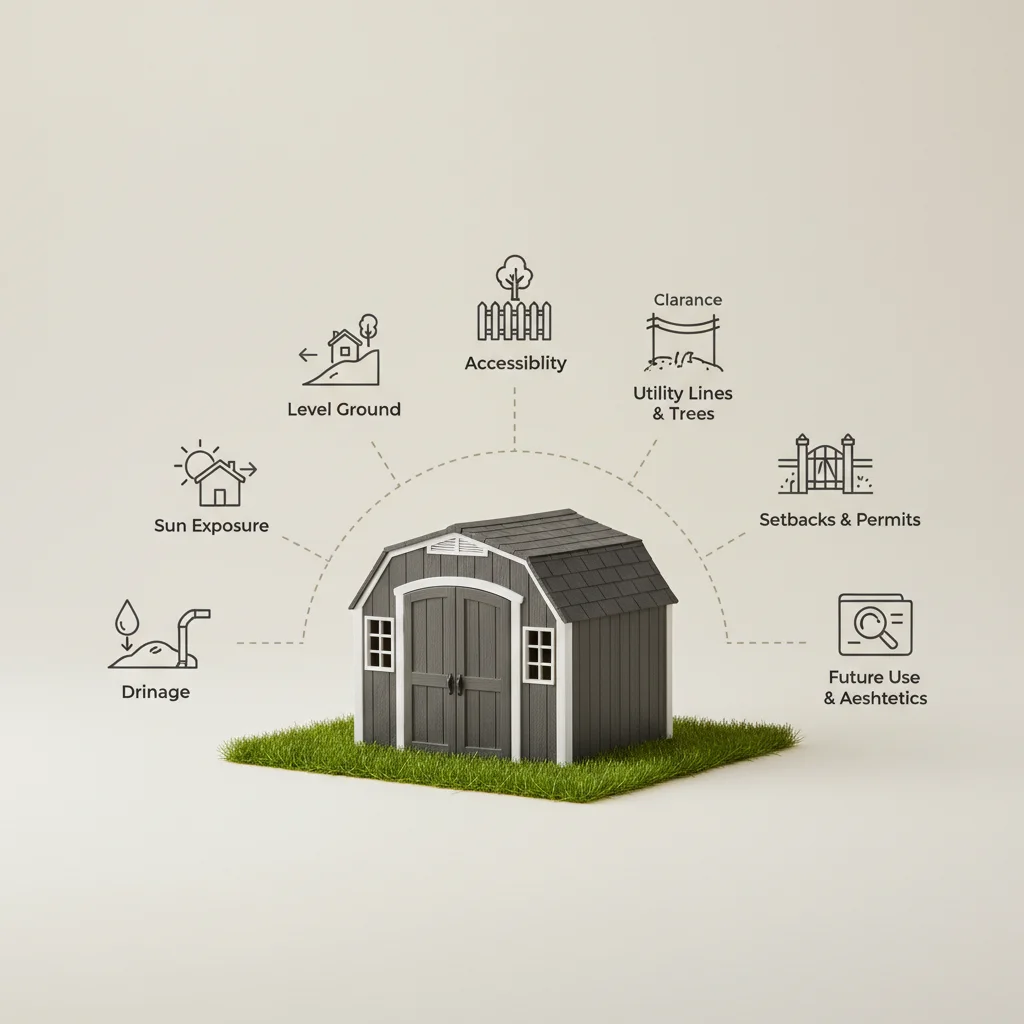
Optimal storage shed placement in your backyard involves adhering to seven key rules that balance accessibility, aesthetics, and regulatory compliance. Proper positioning ensures your shed serves its purpose efficiently without becoming an eyesore or violating local ordinances. Considering factors like sunlight, drainage, and proximity to utilities will save you time and effort in the long run, making your shed a valuable asset to your property.
Rule 1: Understand Local Zoning and Permits
Before you even think about where to put your shed, consult your local Utah zoning department. Many cities and counties have specific regulations regarding setbacks from property lines, easements, and even the maximum size or height of accessory structures like sheds. Failing to obtain necessary permits or adhere to these rules can lead to fines or even the forced removal of your shed. Always verify the requirements for your specific location within Utah. For see our outdoor storage recommendations on this site.
Rule 2: Consider Accessibility and Functionality
Think about what you’ll be storing in your shed and how often you’ll need to access it. If it’s for garden tools, placing it closer to your garden makes sense. If it’s for seasonal items like snow blowers or holiday decorations, a slightly less convenient spot might be acceptable. Ensure there’s a clear, level path to the shed door, especially if you’ll be moving heavy or bulky items in and out. Avoid placing it in a location that requires navigating steep slopes or tight corners.
Rule 3: Evaluate Sunlight and Shade Exposure
Sunlight can impact your shed in several ways. Direct, prolonged sun exposure can fade the exterior finish of your shed and contribute to higher internal temperatures, which might be undesirable for certain stored items. Conversely, a shed placed in constant shade might be more prone to moss or mildew growth, especially in damp climates. A balance is often ideal, perhaps with some morning sun and afternoon shade, or vice versa, depending on your specific needs and the shed material.
Rule 4: Ensure Proper Drainage and Foundation
|
Our Picks for the Best Storage Shed in 2026
As an Amazon Associate I earn from qualifying purchases.
|
||
| Num | Product | Action |
|---|---|---|
| 1 | Bike Tent, 81 * 39 * 65 in Outdoor Portable Storage Sheds, 210D Oxford Thick Waterproof Fabric,PU4000 Waterproof for 2/3/4 Bikes,Bike Covers for Motorcycle,Garden Tools,Lawn Mower |

|
| 2 | Happy Travel Bike Storage Tent, Outdoor 8×7×6.3ft Large 2-in-1 Portable Shed More 30% Top Space W/Double Doors with Mesh, Outside Lawn Mower Shelter and Bicycle Cover for Patio Furniture, Garden Tools |
|
| 3 | Happy Travel Bike Storage Tent Shed, Outdoor Waterproof Bicycle Covers Shelter with Window for 2/4/6/8 Bikes,Oversized Outside Portable Sheds for Lawn Mower,Garden Tools (Black) |
|
| 4 | 39.4" Larger Storage Shed Tent for Bike Motorcycle ebike eScooter Lawn Mower Outdoor Canopy Shelter Protection with Water Resistant Dustproof Windproof and Sunproof for RV Travel |
|
| 5 | Bike Storage Shed Tent,Bike Cover Waterproof Outdoor Storage Shed with 30% More Top Storage Space for 4-5Bikes,Portable Bicycle Shelter for Motorcycle,Garden Tools,Lawn Mower |
|
| 6 | Happy Travel Bike Storage Tent Shed, Outdoor Waterproof Bicycle Covers Shelter with Window for 2/3/4/6/8 Bikes,Oversized Outside Portable Sheds for Lawn Mower,Garden Tools |
|
| 7 | Bike Storage Tent,for 2-10 Bikes, 118 x 86 x 72 in Outdoor Portable Bike Storage, 210D Oxford Fabric PU4000 Waterproof, 2 Rolling Doors, for Motorcycles or Large Motorcycles, Without Floor |
|
| 8 | Housolution Bike Storage Tent Shed for 5 Bikes, Outdoor Portable 210D Oxford Thick PU4000 Waterproof Bike Cover with Ventilated Window, Bike Tent Fit for Bicycle, Lawn Mower, Garden Tools |
|
| 9 | Bike Storage Shed Tent, Outdoor Bicycle Storage Shed, Waterproof Portable Bike Covers Shelter, 7.2x4.9x6.1ft Large Garage Tent for Motorcycle, Garden Tools, Lawn Mower |
|
| 10 | Happy Travel Bike Storage Shed Tent,Outdoor Portable Bicycle Storage Sheds with 210D Oxford Fabric PU4000 Waterproof for 2/3/4/6/8 Bikes,Bike Covers Shelter for Motorcycle,Garden Tools,Toys,Lawn Mower |
|
Water is the enemy of any shed. Never place your shed in a low-lying area where water tends to collect after rain or snowmelt. This can lead to foundation damage, wood rot, and moisture issues inside the shed. The ground beneath your shed should be level and allow for good drainage away from the structure. Consider a gravel base or a concrete slab to elevate the shed and prevent moisture wicking. Proper drainage is crucial for the longevity of your shed and the protection of its contents.
Rule 5: Maintain Aesthetic Appeal and View Lines
While functionality is important, your shed should also complement your backyard’s overall aesthetic. Avoid placing it directly in front of a window or blocking a desirable view. Consider how the shed will look from different angles of your yard and from your home. Sometimes, strategic landscaping around the shed can help it blend in more seamlessly with its surroundings, turning a utilitarian structure into an attractive feature.
Rule 6: Proximity to Utilities and Obstacles
Be mindful of underground utility lines (water, gas, electrical) and overhead power lines when choosing a shed location. Always call 811 before digging to avoid striking any buried utilities. Also, consider existing obstacles like large trees, fences, or other structures. You’ll need enough clearance to assemble the shed and perform future maintenance, such as painting or roof repairs.
Rule 7: Plan for Future Access and Maintenance
Think about the long-term. Will you need to access all sides of the shed for painting, cleaning, or repairs? Ensure there’s enough space around the perimeter for these tasks. Also, consider future landscaping plans or potential additions to your yard. A well-thought-out placement now can prevent headaches and costly relocations later. A good rule of thumb is to leave at least 2-3 feet of clear space around the entire shed.
- Check local Utah building codes and HOA rules for setbacks and permits.
- Assess the primary function of your shed to determine optimal accessibility.
- Observe sun and shade patterns throughout the day and year.
- Ensure the site has excellent drainage to prevent moisture issues.
- Consider the visual impact of the shed from your home and yard.
