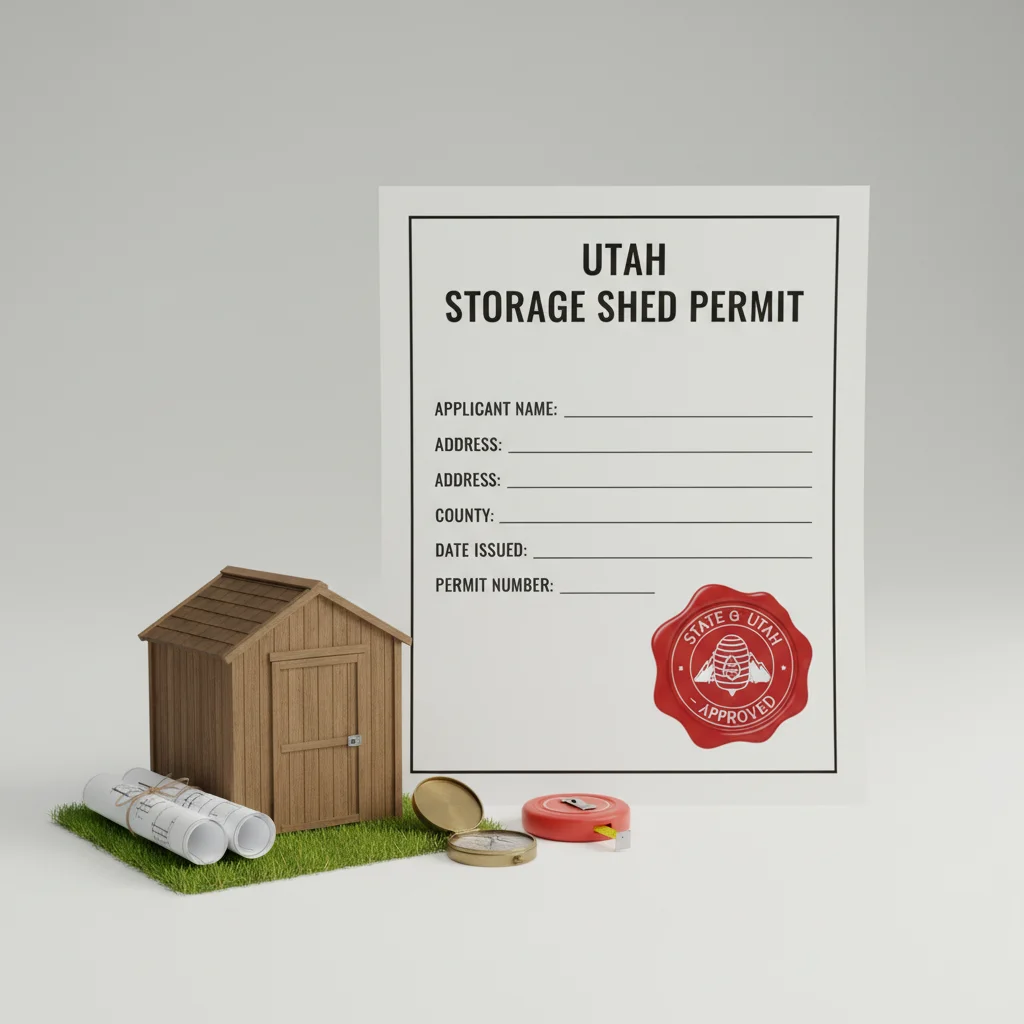
Understanding storage shed permits in Utah is crucial before you begin construction. Generally, you will need a permit for any shed exceeding 200 square feet in most Utah municipalities, though this can vary. Smaller sheds, typically under 200 square feet, often fall under an exemption, but it’s always best to verify with your local planning department to avoid potential fines or forced demolition.
When a Storage Shed Permit is Required in Utah
The primary factor determining if a permit is needed for your storage shed in Utah is its size. Most cities and counties adopt the International Residential Code (IRC) which often exempts accessory structures under 200 square feet from needing a building permit. However, even if a building permit isn’t required, you might still need a zoning permit to ensure your shed complies with setback requirements and lot coverage limits. For example, a shed over 12 feet in height, regardless of footprint, might also trigger a permit requirement due to structural considerations. Always check with your specific city or county planning and zoning department, as local ordinances can add additional stipulations. For best outdoor storage roundups on this site.
Beyond size, the intended use of the shed can also dictate permit needs. If you plan to run electricity, plumbing, or use the shed for habitable space, even a small one, you will almost certainly need permits for those specific installations and potentially a change of use permit. These types of modifications introduce safety and health considerations that local authorities need to review and approve.
Navigating Local Zoning and Setback Requirements
Even if your shed is small enough to be exempt from a building permit, zoning regulations are almost always in effect. These regulations dictate where on your property you can place the shed, often specifying minimum distances from property lines (setbacks), other structures, and even easements. Failing to adhere to these can lead to disputes with neighbors or require you to move the shed. Before purchasing or building, obtain a copy of your property’s plat map and review your local zoning ordinance for accessory structures. Some areas may also have specific aesthetic requirements, especially in historic districts or homeowners’ associations.
- Verify local setback requirements from property lines and other buildings.
- Check for any height restrictions for accessory structures.
- Confirm lot coverage limits to ensure your shed doesn’t exceed the maximum allowed percentage of your property.
- Inquire about any specific material or aesthetic guidelines for sheds in your area.
- Understand if your property has any easements that might restrict shed placement.
The Permit Application Process: What to Expect
|
Our Picks for the Best Storage Shed in 2026
As an Amazon Associate I earn from qualifying purchases.
|
||
| Num | Product | Action |
|---|---|---|
| 1 | Happy Travel Bike Storage Tent Shed, Outdoor Waterproof Bicycle Covers Shelter with Window for 2/3/4/6/8 Bikes,Oversized Outside Portable Sheds for Lawn Mower,Garden Tools |

|
| 2 | 39.4" Larger Storage Shed Tent for Bike Motorcycle ebike eScooter Lawn Mower Outdoor Canopy Shelter Protection with Water Resistant Dustproof Windproof and Sunproof for RV Travel |
|
| 3 | Bike Tent, 81 * 39 * 65 in Outdoor Portable Storage Sheds, 210D Oxford Thick Waterproof Fabric,PU4000 Waterproof for 2/3/4 Bikes,Bike Covers for Motorcycle,Garden Tools,Lawn Mower |
|
| 4 | Bike Storage Shed Tent, Outdoor Bicycle Storage Shed, Waterproof Portable Bike Covers Shelter, 7.2x4.9x6.1ft Large Garage Tent for Motorcycle, Garden Tools, Lawn Mower |
|
| 5 | Happy Travel Bike Storage Tent Shed, Outdoor Waterproof Bicycle Covers Shelter with Window for 2/4/6/8 Bikes,Oversized Outside Portable Sheds for Lawn Mower,Garden Tools (Black) |
|
| 6 | Bike Storage Tent,for 2-10 Bikes, 118 x 86 x 72 in Outdoor Portable Bike Storage, 210D Oxford Fabric PU4000 Waterproof, 2 Rolling Doors, for Motorcycles or Large Motorcycles, Without Floor |
|
| 7 | Happy Travel Bike Storage Tent, Outdoor 8×7×6.3ft Large 2-in-1 Portable Shed More 30% Top Space W/Double Doors with Mesh, Outside Lawn Mower Shelter and Bicycle Cover for Patio Furniture, Garden Tools |
|
| 8 | Happy Travel Bike Storage Shed Tent,Outdoor Portable Bicycle Storage Sheds with 210D Oxford Fabric PU4000 Waterproof for 2/3/4/6/8 Bikes,Bike Covers Shelter for Motorcycle,Garden Tools,Toys,Lawn Mower |
|
| 9 | Housolution Bike Storage Tent Shed for 5 Bikes, Outdoor Portable 210D Oxford Thick PU4000 Waterproof Bike Cover with Ventilated Window, Bike Tent Fit for Bicycle, Lawn Mower, Garden Tools |
|
| 10 | Bike Storage Shed Tent,Bike Cover Waterproof Outdoor Storage Shed with 30% More Top Storage Space for 4-5Bikes,Portable Bicycle Shelter for Motorcycle,Garden Tools,Lawn Mower |
|
Applying for a storage shed permit in Utah typically involves submitting an application form, a site plan, and sometimes construction drawings. The site plan should clearly show your property lines, existing structures, and the proposed location of your new shed, including its dimensions and distances to property lines. For larger sheds, detailed construction drawings might be necessary to demonstrate compliance with structural codes. Expect a review period, which can range from a few days to several weeks, depending on the complexity of your project and the workload of the permitting office. Fees are also associated with permit applications, varying by municipality and project scope.
Once your permit is approved, you’ll receive a permit card that must be displayed on your property. Inspections may be required at various stages of construction, especially for larger sheds or those with electrical or plumbing installations. Ensure you schedule these inspections as required to keep your project compliant.
Consequences of Building Without a Permit
Building a storage shed without the necessary permits can lead to significant problems. If discovered, you could face fines, be required to stop construction, or even be ordered to demolish the structure. Local authorities have the power to issue stop-work orders and levy daily fines until the issue is resolved. Furthermore, if you later decide to sell your property, an unpermitted structure can complicate the sale, as it may not be insurable or could be flagged during a home inspection. It’s always more cost-effective and less stressful to obtain the proper permits upfront than to deal with the repercussions later.
Additionally, an unpermitted shed might not be covered by your homeowner’s insurance in the event of damage or loss. Insurance companies often require structures to be built to code and with proper permits to ensure coverage. Protecting your investment means following all local regulations.
Tips for a Smooth Permitting Process
To ensure a smooth permitting process, start early. Research your local requirements well in advance of purchasing or building your shed. Gather all necessary documentation, including your property’s legal description and any existing surveys. Don’t hesitate to call or visit your local planning and zoning department with any questions; they are there to help you navigate the process. Being prepared and proactive will save you time and potential headaches in the long run, ensuring your new storage shed is a compliant and valuable addition to your Utah property.
