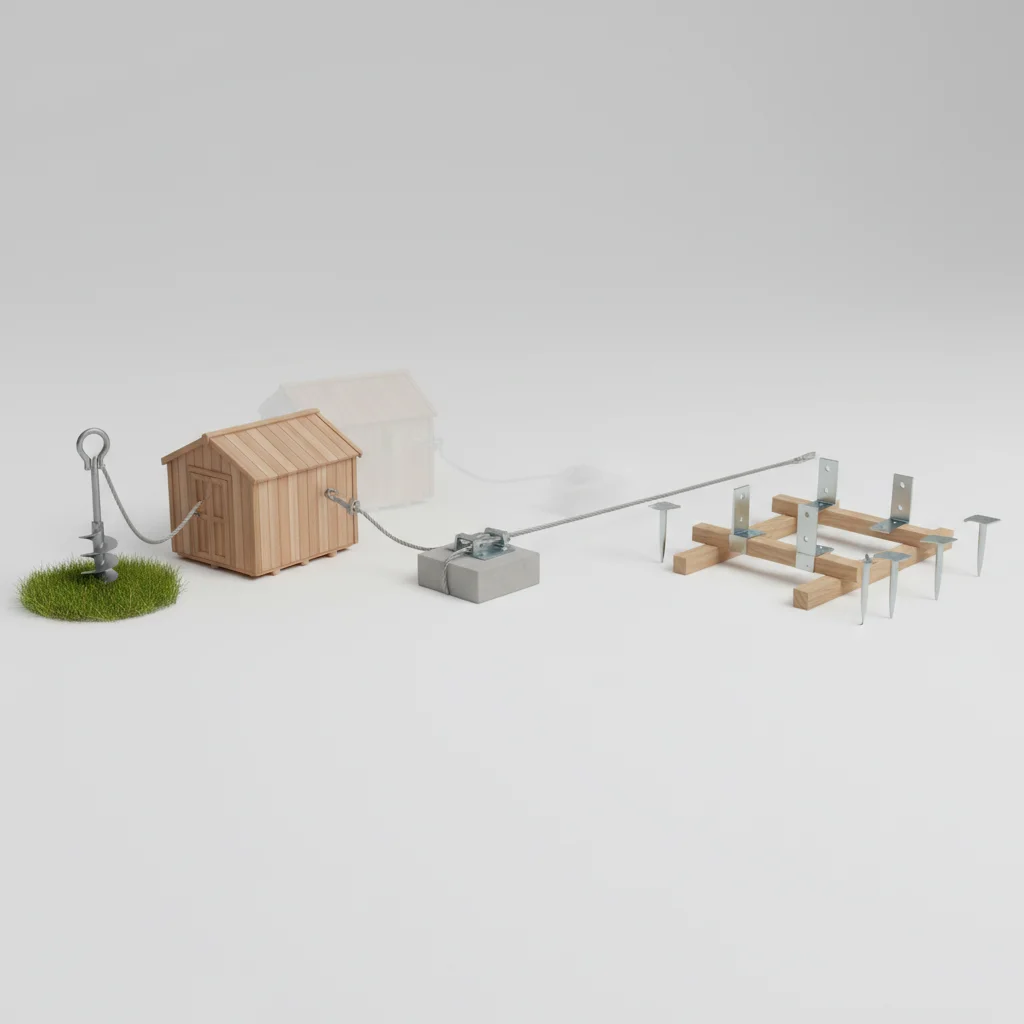
Choosing the right storage shed anchoring method is crucial for protecting your investment, especially in areas prone to high winds. The best method depends on your shed’s material, foundation type, and local weather conditions. For most residential sheds, a combination of ground anchors and hurricane ties offers superior stability against strong gusts.
Understanding Different Anchoring Systems
There are several effective ways to anchor a storage shed, each with its own advantages. Ground anchors, such as auger-style or drive-in stakes, are popular for sheds placed directly on the ground or on a gravel base. These anchors screw or hammer into the earth, providing a secure hold. For sheds on concrete slabs, anchor bolts or expansion bolts are drilled directly into the concrete and secured to the shed’s frame. Another robust option involves using hurricane ties, which are metal connectors that secure the shed walls to the foundation, preventing uplift during severe weather events.
The choice often comes down to the shed’s weight and the expected wind loads. Lighter sheds, like those made of resin or thin metal, require more robust anchoring than heavy wooden sheds. Always consult local building codes, as they may specify minimum anchoring requirements for your area.
Ground Anchors: Auger vs. Drive-In
Ground anchors are a versatile solution for many shed types. Auger anchors, which resemble large screws, are twisted into the ground until the top loop is flush with the surface. They provide excellent holding power in various soil conditions, from sandy to clay. Drive-in anchors, on the other hand, are hammered into the ground and often have a barbed or expanding end to resist pull-out. While generally easier to install, their holding power can vary depending on soil compaction.
When using ground anchors, ensure they are spaced evenly around the shed’s perimeter, typically every 4-6 feet, and connected to the shed’s base frame with heavy-duty straps or cables. This distributes the load and prevents any single point from bearing too much stress during high winds.
Anchoring to Concrete Slabs
|
Our Picks for the Best Storage Shed in 2026
As an Amazon Associate I earn from qualifying purchases.
|
||
| Num | Product | Action |
|---|---|---|
| 1 | Housolution Bike Storage Tent Shed for 5 Bikes, Outdoor Portable 210D Oxford Thick PU4000 Waterproof Bike Cover with Ventilated Window, Bike Tent Fit for Bicycle, Lawn Mower, Garden Tools |

|
| 2 | Happy Travel Bike Storage Tent Shed, Outdoor Waterproof Bicycle Covers Shelter with Window for 2/4/6/8 Bikes,Oversized Outside Portable Sheds for Lawn Mower,Garden Tools (Black) |
|
| 3 | Bike Storage Tent,for 2-10 Bikes, 118 x 86 x 72 in Outdoor Portable Bike Storage, 210D Oxford Fabric PU4000 Waterproof, 2 Rolling Doors, for Motorcycles or Large Motorcycles, Without Floor |
|
| 4 | Bike Storage Shed Tent,Bike Cover Waterproof Outdoor Storage Shed with 30% More Top Storage Space for 4-5Bikes,Portable Bicycle Shelter for Motorcycle,Garden Tools,Lawn Mower |
|
| 5 | Bike Tent, 81 * 39 * 65 in Outdoor Portable Storage Sheds, 210D Oxford Thick Waterproof Fabric,PU4000 Waterproof for 2/3/4 Bikes,Bike Covers for Motorcycle,Garden Tools,Lawn Mower |
|
| 6 | Happy Travel Bike Storage Tent, Outdoor 8×7×6.3ft Large 2-in-1 Portable Shed More 30% Top Space W/Double Doors with Mesh, Outside Lawn Mower Shelter and Bicycle Cover for Patio Furniture, Garden Tools |
|
| 7 | Happy Travel Bike Storage Shed Tent,Outdoor Portable Bicycle Storage Sheds with 210D Oxford Fabric PU4000 Waterproof for 2/3/4/6/8 Bikes,Bike Covers Shelter for Motorcycle,Garden Tools,Toys,Lawn Mower |
|
| 8 | 39.4" Larger Storage Shed Tent for Bike Motorcycle ebike eScooter Lawn Mower Outdoor Canopy Shelter Protection with Water Resistant Dustproof Windproof and Sunproof for RV Travel |
|
| 9 | Happy Travel Bike Storage Tent Shed, Outdoor Waterproof Bicycle Covers Shelter with Window for 2/3/4/6/8 Bikes,Oversized Outside Portable Sheds for Lawn Mower,Garden Tools |
|
| 10 | Bike Storage Shed Tent, Outdoor Bicycle Storage Shed, Waterproof Portable Bike Covers Shelter, 7.2x4.9x6.1ft Large Garage Tent for Motorcycle, Garden Tools, Lawn Mower |
|
If your shed is built on a concrete slab, you have some of the most secure anchoring options available. Anchor bolts are typically set into the wet concrete during the pouring process, with the threaded end protruding to attach the shed’s base plate. Alternatively, after the concrete has cured, expansion bolts or wedge anchors can be drilled into the slab. These expand within the concrete, creating a strong, permanent connection.
For maximum security, especially in hurricane-prone regions, consider using a combination of anchor bolts and hurricane ties. The ties connect the shed’s wall studs directly to the foundation, providing an additional layer of protection against uplift forces. Proper sealing around any drilled holes is also important to prevent water intrusion.
Hurricane Ties and Straps for Enhanced Security
Hurricane ties are specifically designed to resist uplift and lateral forces caused by high winds. These metal connectors are typically installed at the junction of the shed’s walls and foundation, or between the roof trusses and wall plates. They effectively create a continuous load path, transferring wind forces from the roof down to the foundation.
In addition to ties, heavy-duty straps made of galvanized steel or strong synthetic materials can be used to secure the shed to ground anchors or a concrete foundation. These straps are often used in conjunction with other anchoring methods to provide extra reinforcement, particularly for larger or taller sheds that present a greater surface area to the wind.
- Auger Anchors: Best for soil, gravel, and lighter sheds.
- Expansion Bolts: Ideal for concrete slabs, offering strong, permanent hold.
- Hurricane Ties: Essential for resisting uplift and lateral wind forces.
- Heavy-Duty Straps: Provide additional reinforcement for all shed types.
- Concrete Piers: Offer a raised, stable base with integrated anchoring points.
Installation Tips for Optimal Wind Resistance
Proper installation is just as important as choosing the right anchoring method. Always follow the manufacturer’s instructions for your specific anchors and shed. Ensure all connections are tight and secure, and regularly inspect your anchoring system for any signs of wear or loosening, especially after severe weather. For sheds on uneven ground, consider leveling the site or using concrete piers to create a stable base before installing anchors.
Remember that a well-anchored shed not only protects your belongings but also prevents potential damage to surrounding property from a shed becoming airborne in a storm. Investing a little extra time and effort in a robust anchoring system can save you significant headaches and costs down the line.
