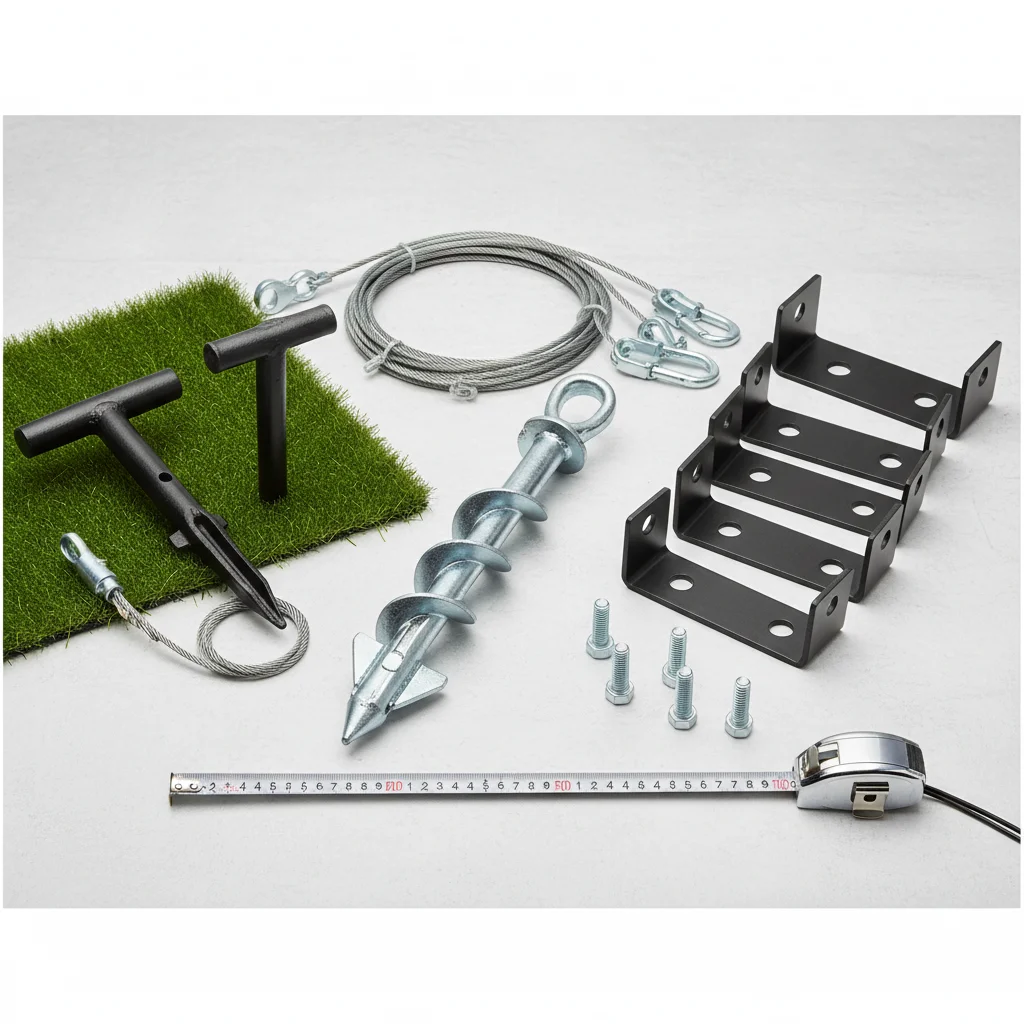
Storage shed anchoring is crucial for preventing damage and ensuring safety, especially in areas prone to high winds. While not every shed absolutely requires anchoring, it is highly recommended for most installations to protect your investment and prevent potential hazards. In Utah, where wind gusts can be significant, anchoring provides essential stability against uplift and sliding.
Why Storage Shed Anchoring is Essential
Anchoring your storage shed secures it to the ground, preventing it from shifting, tipping, or even blowing away during strong winds. This is particularly important for lighter sheds made of resin or thin metal, but even heavier wooden sheds can be vulnerable. Proper anchoring protects the shed’s contents and prevents it from becoming a dangerous projectile in severe weather. It also helps maintain the structural integrity of the shed over time by reducing stress from movement.
Types of Anchoring Systems for Storage Sheds
There are several effective methods for anchoring a storage shed, each suited for different foundation types and shed materials. The most common include ground anchors, concrete anchors, and tie-down kits. Ground anchors, often helical or auger-style, are screwed into the soil and connected to the shed frame. Concrete anchors, such as wedge anchors or sleeve anchors, are used when the shed is placed on a concrete slab, providing a very strong hold. Tie-down kits typically involve straps or cables that secure the shed to a foundation or ground anchors.
- Helical ground anchors for soil foundations
- Wedge or sleeve anchors for concrete slabs
- J-bolt anchors embedded in fresh concrete
- Heavy-duty tie-down straps for temporary or lighter sheds
- Earth anchors for extreme wind conditions
Choosing the Right Anchoring Method
|
Our Picks for the Best Storage Shed in 2026
As an Amazon Associate I earn from qualifying purchases.
|
||
| Num | Product | Action |
|---|---|---|
| 1 | Bike Storage Shed Tent, Outdoor Bicycle Storage Shed, Waterproof Portable Bike Covers Shelter, 7.2x4.9x6.1ft Large Garage Tent for Motorcycle, Garden Tools, Lawn Mower |

|
| 2 | Happy Travel Bike Storage Tent Shed, Outdoor Waterproof Bicycle Covers Shelter with Window for 2/3/4/6/8 Bikes,Oversized Outside Portable Sheds for Lawn Mower,Garden Tools |
|
| 3 | Happy Travel Bike Storage Tent, Outdoor 8×7×6.3ft Large 2-in-1 Portable Shed More 30% Top Space W/Double Doors with Mesh, Outside Lawn Mower Shelter and Bicycle Cover for Patio Furniture, Garden Tools |
|
| 4 | Bike Tent, 81 * 39 * 65 in Outdoor Portable Storage Sheds, 210D Oxford Thick Waterproof Fabric,PU4000 Waterproof for 2/3/4 Bikes,Bike Covers for Motorcycle,Garden Tools,Lawn Mower |
|
| 5 | Happy Travel Bike Storage Tent Shed, Outdoor Waterproof Bicycle Covers Shelter with Window for 2/4/6/8 Bikes,Oversized Outside Portable Sheds for Lawn Mower,Garden Tools (Black) |
|
| 6 | Housolution Bike Storage Tent Shed for 5 Bikes, Outdoor Portable 210D Oxford Thick PU4000 Waterproof Bike Cover with Ventilated Window, Bike Tent Fit for Bicycle, Lawn Mower, Garden Tools |
|
| 7 | Bike Storage Shed Tent,Bike Cover Waterproof Outdoor Storage Shed with 30% More Top Storage Space for 4-5Bikes,Portable Bicycle Shelter for Motorcycle,Garden Tools,Lawn Mower |
|
| 8 | Bike Storage Tent,for 2-10 Bikes, 118 x 86 x 72 in Outdoor Portable Bike Storage, 210D Oxford Fabric PU4000 Waterproof, 2 Rolling Doors, for Motorcycles or Large Motorcycles, Without Floor |
|
| 9 | 39.4" Larger Storage Shed Tent for Bike Motorcycle ebike eScooter Lawn Mower Outdoor Canopy Shelter Protection with Water Resistant Dustproof Windproof and Sunproof for RV Travel |
|
| 10 | Happy Travel Bike Storage Shed Tent,Outdoor Portable Bicycle Storage Sheds with 210D Oxford Fabric PU4000 Waterproof for 2/3/4/6/8 Bikes,Bike Covers Shelter for Motorcycle,Garden Tools,Toys,Lawn Mower |
|
Selecting the appropriate anchoring method depends on several factors: the type of shed, the foundation it rests on, and the local weather conditions. For sheds on dirt or gravel, ground anchors are the most practical choice. If your shed is on a concrete slab, concrete anchors offer superior security. Always check local building codes, as some areas may have specific requirements for shed anchoring, especially for larger structures. Consider the wind zone you live in; areas with frequent high winds will require more robust anchoring solutions.
For instance, a small resin shed on a gravel base might be adequately secured with a basic ground anchor kit, while a large wooden shed on a concrete slab in a high-wind area would benefit from heavy-duty concrete anchors or J-bolts embedded directly into the slab during construction.This ensures maximum stability and peace of mind during adverse weather events.
Installation Tips for Effective Anchoring
Proper installation is key to the effectiveness of any anchoring system. Always follow the manufacturer’s instructions for your specific anchors and shed. Ensure anchors are driven deep enough into the ground or securely fastened into concrete. For ground anchors, make sure they are installed at an angle to resist uplift forces more effectively. Regularly inspect your anchoring system for any signs of wear, corrosion, or loosening, especially after severe weather. Tighten any loose connections and replace damaged components promptly to maintain optimal security.
Consider using a level to ensure your shed remains plumb during and after anchoring, as uneven stress can compromise the shed’s structure over time.A well-anchored shed not only protects your belongings but also contributes to the overall safety of your property.
