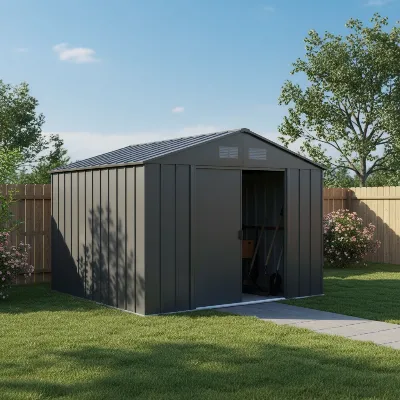
Choosing the perfect storage shed for your backyard can feel like navigating a maze of options, especially when comparing two classic contenders: resin and wood. Whether you’re looking to declutter your garage, create a dedicated workspace, or simply enhance your outdoor living area, a well-chosen storage shed is a significant investment. This guide delves into the essential characteristics, advantages, and disadvantages of resin and wood storage sheds, providing you with all the information needed to make an informed decision in 2026. Let’s explore which material best suits your needs, budget, and lifestyle.
Understanding the Common Types of Storage Sheds
Storage sheds come in a variety of materials, each offering distinct benefits and drawbacks. While metal and vinyl sheds are also popular, resin and wood represent two primary choices, offering a blend of aesthetics, durability, and functionality. Understanding these fundamental differences is crucial for selecting the ideal long-term storage solution.
Resin Storage Sheds
Resin sheds are crafted from high-quality plastics like polypropylene or polyethylene, often molded into strong, interlocking panels. These materials are engineered for resilience, frequently incorporating steel reinforcements for enhanced structural integrity. Designed to be versatile, resin sheds can serve multiple purposes, from organizing garden tools to storing seasonal decorations.
Advantages of Resin Sheds:
- Low Maintenance: Resin sheds require minimal upkeep, with no need for painting, staining, or sealing. They can typically be cleaned with a simple hose-down and mild detergent.
- Weather-Resistant: These sheds excel in diverse climates, resisting rot, rust, and insect damage. They handle rain, snow, and sun exposure without warping, cracking, or corroding. High-quality resin often includes UV inhibitors to prevent fading over time.
- Easy Assembly: Often available in kits, resin sheds are designed for quick and straightforward DIY assembly, usually involving snap-together panels or basic screw fasteners. Their lightweight nature also makes them easier to relocate if needed.
- Cost-Effective: While pricier than basic metal sheds, resin sheds are generally more affordable upfront than high-quality wood options, offering a strong balance of features for the price.
- Aesthetic Appeal: Many modern resin sheds are designed to mimic the texture and appearance of wood, blending aesthetically with various backyard designs without the high maintenance.
Disadvantages of Resin Sheds:
- Limited Customization: Resin sheds offer fewer options for personalization compared to wood. Painting or significant structural modifications are generally not recommended.
- Lower Wall Load-Bearing Capacity: The walls of resin sheds may not support heavy shelving or wall-mounted storage without additional reinforcement.
- Anchoring Required: Due to their lighter weight, resin sheds typically need to be anchored to a stable base to ensure stability, especially in windy conditions.
|
Our Picks for the Best Storage Shed in 2026
As an Amazon Associate I earn from qualifying purchases.
|
||
| Num | Product | Action |
|---|---|---|
| 1 | Housolution Bike Storage Tent Shed for 5 Bikes, Outdoor Portable 210D Oxford Thick PU4000 Waterproof Bike Cover with Ventilated Window, Bike Tent Fit for Bicycle, Lawn Mower, Garden Tools |

|
| 2 | Bike Storage Shed Tent, Outdoor Bicycle Storage Shed, Waterproof Portable Bike Covers Shelter, 7.2x4.9x6.1ft Large Garage Tent for Motorcycle, Garden Tools, Lawn Mower |
|
| 3 | Happy Travel Bike Storage Tent Shed, Outdoor Waterproof Bicycle Covers Shelter with Window for 2/3/4/6/8 Bikes,Oversized Outside Portable Sheds for Lawn Mower,Garden Tools |
|
| 4 | Bike Storage Tent,for 2-10 Bikes, 118 x 86 x 72 in Outdoor Portable Bike Storage, 210D Oxford Fabric PU4000 Waterproof, 2 Rolling Doors, for Motorcycles or Large Motorcycles, Without Floor |
|
| 5 | Happy Travel Bike Storage Tent, Outdoor 8×7×6.3ft Large 2-in-1 Portable Shed More 30% Top Space W/Double Doors with Mesh, Outside Lawn Mower Shelter and Bicycle Cover for Patio Furniture, Garden Tools |
|
| 6 | Bike Storage Shed Tent,Bike Cover Waterproof Outdoor Storage Shed with 30% More Top Storage Space for 4-5Bikes,Portable Bicycle Shelter for Motorcycle,Garden Tools,Lawn Mower |
|
| 7 | Bike Tent, 81 * 39 * 65 in Outdoor Portable Storage Sheds, 210D Oxford Thick Waterproof Fabric,PU4000 Waterproof for 2/3/4 Bikes,Bike Covers for Motorcycle,Garden Tools,Lawn Mower |
|
| 8 | 39.4" Larger Storage Shed Tent for Bike Motorcycle ebike eScooter Lawn Mower Outdoor Canopy Shelter Protection with Water Resistant Dustproof Windproof and Sunproof for RV Travel |
|
| 9 | Happy Travel Bike Storage Shed Tent,Outdoor Portable Bicycle Storage Sheds with 210D Oxford Fabric PU4000 Waterproof for 2/3/4/6/8 Bikes,Bike Covers Shelter for Motorcycle,Garden Tools,Toys,Lawn Mower |
|
| 10 | Happy Travel Bike Storage Tent Shed, Outdoor Waterproof Bicycle Covers Shelter with Window for 2/4/6/8 Bikes,Oversized Outside Portable Sheds for Lawn Mower,Garden Tools (Black) |
|
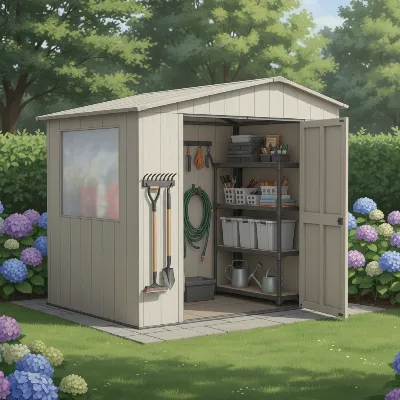 Modern resin storage shed in a backyard with garden tools and organized shelves
Wood Storage Sheds
Wood sheds embody a classic and traditional appeal, built from natural timber such as cedar, pine, or fir. These structures typically feature framed construction, allowing for robust and highly customizable designs. Wood sheds are often chosen for their timeless charm and ability to seamlessly integrate into natural landscapes.
Advantages of Wood Sheds:
- Aesthetic Appeal: Wood provides a warm, natural look that enhances any outdoor setting. The rich grain of natural timber contributes to a rustic charm that many homeowners desire.
- High Customization: Wood is exceptionally versatile, allowing for extensive customization. You can paint or stain it any color, add windows, trim, shelves, or even convert it into a workshop or home office with ease.
- Sturdy Structure & Insulation: Wood sheds offer superior structural integrity and can support heavy items, making them ideal for workshops or storing substantial equipment. Wood also provides better natural insulation, helping to regulate internal temperatures more effectively than other materials.
- Environmentally Friendly (with responsible sourcing): As a renewable resource, wood can be an eco-conscious choice when sourced from sustainable forestry practices. It can also be recycled or repurposed at the end of its lifespan.
- Easier Repair: Unlike other materials, individual wood components can often be repaired or replaced if damaged, extending the shed’s overall lifespan.
Disadvantages of Wood Sheds:
- High Maintenance: Wood sheds demand regular maintenance to protect against the elements. This includes periodic painting, staining, or sealing to prevent moisture damage, UV degradation, and pest infestations.
- Susceptibility to Rot and Pests: Without consistent maintenance, wood is vulnerable to rot, decay, and damage from termites, ants, and other wood-boring insects. Proper site preparation and ongoing care are crucial.
- Higher Initial Cost: Wood sheds generally have a higher upfront cost due to material expenses and the labor involved in construction, especially for larger or custom designs.
- Longer Build Time: Compared to pre-fabricated resin kits, wood sheds typically require more time and skill for assembly, often necessitating professional help or significant DIY experience.
- Fire Risk: Wood is combustible, making these sheds more susceptible to fire compared to non-combustible materials like metal or treated plastics.
Key Factors When Choosing Your Perfect Storage Shed
Selecting the right storage shed involves evaluating several critical factors to ensure it meets your specific requirements and stands the test of time. Beyond just the material, consider how the shed will integrate with your property and serve its intended purpose.
Size and Required Storage Space
Before anything else, accurately assess how much storage space you truly need. Consider not only the items you currently own but also any future acquisitions. Do you need to store large lawnmowers, bicycles, seasonal furniture, or merely gardening tools? Measure the footprint available in your yard and envision the interior layout. A larger shed provides more versatility, potentially allowing for vertical storage solutions or even a dedicated workbench. Conversely, a smaller, more compact shed might be sufficient for minimal storage needs, fitting into tighter spaces.
Material and Durability
The choice between resin and wood significantly impacts durability and long-term performance.
- Resin Sheds: These are celebrated for their exceptional resistance to weather. They are inherently rust-proof, rot-proof, and largely impervious to insect damage. High-quality resin sheds, particularly those with UV inhibitors, can withstand intense sun exposure without fading or becoming brittle. They perform exceptionally well in humid, rainy, or snowy climates where moisture is a constant concern.
- Wood Sheds: While sturdy, wood’s durability is largely dependent on consistent maintenance. Treated wood, like cedar or pressure-treated pine, offers natural resistance to decay and pests. However, without regular sealing, painting, and inspections, wood can warp, rot, and attract insects. In milder climates with proper care, a well-built wood shed can last for decades, often outliving its resin counterparts.
Budget and Installation Costs
Your budget plays a pivotal role in the shed selection process. Consider both the initial purchase price and long-term expenses.
- Resin Sheds: Typically fall into a medium price range ($800–$2,500), offering a cost-effective solution with minimal ongoing maintenance costs. Assembly is often a DIY project, saving on labor.
- Wood Sheds: Generally represent a higher initial investment ($1,000–$4,000+), especially for premium woods or custom designs. Beyond the purchase, factor in recurring costs for paint, stain, sealant, and potential repairs over the years. If you’re not a skilled DIYer, professional installation will add to the overall cost.
Placement and Environmental Factors
The local climate and chosen location for your shed significantly influence which material will perform best.
- Humid or Rainy Climates: Resin sheds are ideal here due to their inherent resistance to moisture, preventing rot, rust, and mold. Wood sheds require diligent maintenance to combat humidity and rainfall.
- Extreme Heat: Resin sheds with UV protection can handle intense sun without cracking or fading. Wood may dry out and warp if not properly sealed and protected.
- Heavy Snow or Cold: Both resin and solidly built, well-maintained wood sheds can manage snow loads. Wood’s natural insulation properties can be an advantage for colder climates if the shed is used as a workspace.
- Coastal Areas: Salt air can be corrosive. Resin sheds hold up well, whereas wood needs extra protection to prevent salt and water damage.
Comparing Top Storage Shed Materials
When navigating the market, you’ll find that leading manufacturers of storage sheds focus on delivering solutions that balance durability, aesthetics, and ease of use. While specific brand names are less critical than material type for this comparison, the general quality and innovations across the industry continue to advance. Many brands offer a range of resin sheds designed for low maintenance and ease of assembly, often with finishes that mimic natural wood. For wood sheds, manufacturers emphasize robust construction, quality timber (like cedar for natural resistance), and customizable kits that cater to various aesthetic preferences and functional needs. The market trend indicates a strong push towards products that offer longevity and require less effort from the homeowner, a space where resin sheds often find their footing.
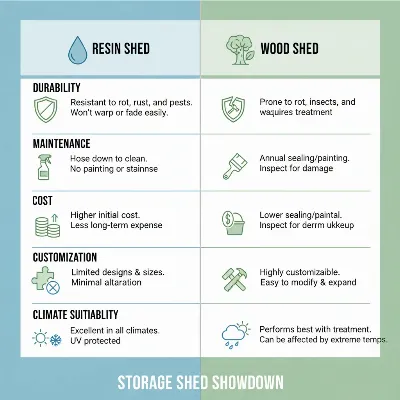 A detailed comparison chart illustrating features of resin and wood storage sheds.
Detailed Comparison Table
| Feature | Resin Shed | Wood Shed |
|---|---|---|
| Material | High-quality plastic (polypropylene, polyethylene), often with steel reinforcement | Natural timber (cedar, pine, fir), framed construction |
| Durability | Excellent weather resistance; rot, rust, insect proof; UV-resistant | Strong, but requires protection from rot, insects, and moisture |
| Maintenance | Very low; easy to clean, no painting/sealing required | High; requires regular painting, staining, sealing, and pest checks |
| Installation | Easy, often DIY-friendly with snap-together panels; lightweight | Moderate to complex; may require tools, carpentry skills, or professional help |
| Look & Feel | Modern, clean, sometimes designed to mimic wood texture | Traditional, classic, warm, highly customizable aesthetic |
| Lifespan | 10-15 years (with minimal care); high-quality can last longer | 15-20+ years (with consistent, good maintenance) |
| Price Range | Medium ($800–$2,500) | Higher ($1,000–$4,000+) |
| Customization | Limited design and color options; hard to paint or modify | Very high; easily painted, stained, modified, and accessorized |
| Insulation | Minimal (some have double walls for slight improvement) | Good natural insulation; easier to add additional insulation for climate control |
| Pest Resistance | Excellent; impervious to wood-boring insects | Vulnerable without consistent treatment and maintenance |
| Fire Resistance | Good; generally slow to burn and self-extinguishing | Low; highly combustible without fire-resistant treatments |
A Comprehensive Buying Guide for Storage Sheds
Making the right choice for your storage shed involves a thoughtful approach, from initial planning to long-term maintenance. This guide breaks down the process to help you find the perfect fit.
Steps to Choosing Your Ideal Storage Shed
- Define Your Needs: Start by listing what you intend to store. This dictates the size, type, and internal features (shelving, hooks) you’ll require. Consider if the shed will purely be for storage or if it will serve a dual purpose, like a workshop or hobby space.
- Assess Your Space: Measure the available footprint in your yard, taking into account any property line setbacks or HOA restrictions. Also, consider accessibility for delivery and assembly.
- Evaluate Climate Conditions: Factor in your local weather. High humidity, heavy rainfall, extreme temperatures, or coastal salt air will strongly influence the best material choice for durability.
- Set a Realistic Budget: Determine your financial comfort zone, including the purchase price, delivery, foundation preparation, and any potential installation costs. Remember to account for long-term maintenance in your budget.
- Prioritize Features: Decide what’s most important: low maintenance, aesthetic appeal, customization, or heavy-duty storage capacity. This will guide you toward either a resin or wood shed.
- Research & Compare: Look at different models and brands within your preferred material type. Compare specifications, warranties, and customer reviews.
- Consider the Foundation: All sheds require a stable, level base. This could be concrete blocks for smaller sheds, a gravel pad, or a concrete slab for larger, heavier structures. Proper drainage around the base is essential to prevent moisture issues, especially for wood sheds.
Tips for Saving Costs
- DIY Assembly: Resin sheds, and many wood shed kits, can be assembled by homeowners, significantly reducing labor costs. Ensure you have the necessary tools and a few helping hands.
- Off-Season Purchases: Look for sales during off-peak seasons, such as late fall or winter, when demand might be lower.
- Standard Sizes: Opting for standard shed sizes rather than custom dimensions can often lead to savings.
- Smart Material Choice: While wood can have a higher upfront cost, resin sheds offer lower long-term maintenance expenses, which can be a significant saving over the shed’s lifespan.
- Local Resources: Check local building supply stores or online marketplaces for discounted materials if you plan a DIY wood build.
Installation and Maintenance Notes
- Foundation First: Always begin with a prepared, level foundation. This prevents structural issues, door misalignment, and moisture accumulation.
- Ventilation is Key: Ensure adequate ventilation in any shed to prevent moisture buildup, mold, and mildew, which is particularly important for wood sheds.
- Resin Shed Maintenance: Beyond an occasional wash with soap and water, resin sheds are largely “set it and forget it.” Periodically check for loose panels after strong winds.
- Wood Shed Maintenance: This is an ongoing commitment. Expect to paint or stain your wood shed every 2-3 years to protect it from UV damage and moisture. Regularly inspect for signs of pests, rot, or decay, and address any issues promptly. Keep the area around the shed clear of debris to prevent moisture traps and pest habitats.
Creative Applications of Storage Sheds
Beyond their primary function, storage sheds offer exciting potential to expand your living space and cater to various hobbies or needs. With a bit of creativity, your shed can transform into a valuable extension of your home.
Transforming Your Storage Shed
- Home Office or Studio: A wood shed, with its natural insulation and ease of customization, can be comfortably converted into a quiet backyard office or an art studio. Add windows for natural light, insulation for year-round comfort, and electrical wiring for power. Resin sheds can also work for a basic office, though they may require more effort for insulation and power.
- Workshop or Hobby Space: For the DIY enthusiast, a sturdy wood shed provides ample space for tools and a workbench. Its robust walls can support heavy shelving, and the ability to easily add electrical outlets makes it highly functional. Resin sheds are suitable for lighter workshops, often utilizing pre-designed storage systems.
- “She Shed” or “Man Cave”: Create a personalized retreat! Decorate a wood shed with comfortable seating, themed decor, and perhaps a small bar or reading nook. Resin sheds can also be styled for a simpler, modern escape.
- Kids’ Playroom: A converted shed offers a dedicated, weather-protected space for children’s activities and toy storage, keeping the main house tidier. Ensure proper insulation, ventilation, and safety features.
- Fitness Studio: With enough space, a shed can house exercise equipment, providing a private gym space away from household distractions. Again, wood sheds offer better temperature regulation for this purpose.
> “The best shed isn’t just about storage; it’s about unlocking the potential of your outdoor space, transforming a simple structure into a functional, beautiful extension of your home.”
These creative uses highlight that a storage shed is more than just a box for your belongings; it’s a versatile structure capable of enhancing your property’s value and functionality.
Conclusion
The decision between a resin and wood storage shed ultimately hinges on your priorities, budget, and willingness to undertake maintenance. Resin sheds offer a compelling package of low maintenance, excellent weather resistance, and straightforward assembly, making them a practical choice for busy homeowners and those in harsh climates. On the other hand, wood sheds deliver unparalleled aesthetic appeal, superior customization options, and robust construction, ideal for those who value traditional charm, heavy-duty storage, or a convertible workspace and are prepared for ongoing upkeep.
Both materials provide valuable storage solutions, and with careful consideration of your individual needs and local environmental factors, you can confidently select a storage shed that will serve you well for years to come. What kind of creative space will your new Storage Shed inspire in your backyard?
Frequently Asked Questions
Which type of storage shed lasts longer, resin or wood?
A well-maintained wood shed can last 15-20+ years, or even longer, but requires consistent effort like painting and sealing. Resin sheds typically last 10-15 years with minimal care, excelling in weather resistance without needing frequent upkeep.
Are resin sheds strong enough for heavy tools and equipment?
Resin sheds are durable for general storage but generally have a lower wall load-bearing capacity than wood sheds. For heavy tools or extensive wall-mounted shelving, wood sheds often provide superior structural support and versatility for modifications.
Can I paint a resin storage shed to match my home?
Most resin sheds are not designed to be painted. They come in fade-resistant colors with UV protection built into the material. If matching your home’s exact aesthetic is a top priority, a customizable wood shed might be a better choice.
Is it cheaper to build a wood shed or buy a pre-made resin shed?
Generally, a pre-made resin shed can be more affordable upfront, especially considering DIY assembly. Building a wood shed from scratch can be cheaper if you have the skills and tools, but premium wood materials and professional labor typically make wood sheds a higher initial investment.
How do harsh climates affect resin versus wood sheds?
Resin sheds perform exceptionally well in harsh climates, resisting moisture, UV rays, and pests without warping or rotting. Wood sheds can withstand harsh weather if diligently maintained with regular sealing and treatment, but they are more susceptible to damage from prolonged exposure to humidity, rain, or extreme sun without consistent care.