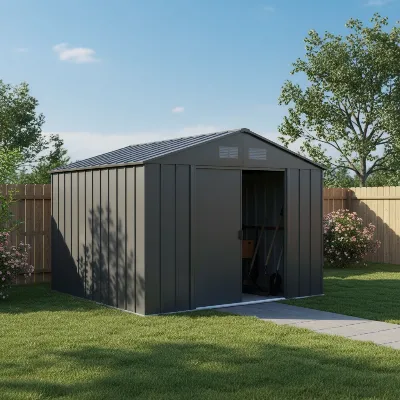
Securing your resin storage shed to a concrete slab is a critical step that ensures its longevity and protects your belongings from the elements. While resin sheds are celebrated for their lightweight design and ease of assembly, this very characteristic makes them vulnerable to strong winds and adverse weather conditions if not properly anchored. A securely fastened shed not only prevents it from shifting or lifting but also enhances its overall stability and security, offering you peace of mind. This DIY guide will walk you through the essential steps, tools, and best practices to confidently anchor your resin shed to a concrete foundation.
Understanding Resin Shed Anchoring Needs
Anchoring a resin shed to a concrete slab goes beyond simply keeping it in place; it’s about safeguarding your investment and its contents. Resin, being a lighter material compared to wood or metal, requires particular attention to anchoring. High winds can easily lift an unanchored shed, turning it into a dangerous projectile or causing significant damage to the structure itself. Proper anchoring distributes forces evenly, mitigating the risk of structural failure and displacement during severe weather.
Factors like local climate, shed size, and the condition of your concrete slab all play a role in determining the most effective anchoring strategy. Areas prone to hurricanes or strong gusts will naturally demand a more robust anchoring system. Similarly, larger sheds present a greater surface area for wind to act upon, necessitating more anchor points and stronger fasteners. Before beginning any work, always review your local building codes and zoning laws to ensure compliance with any specific requirements for outdoor structures. A stable, level concrete foundation is paramount; if your slab is cracked or uneven, addressing these issues beforehand is crucial for a secure installation.
Essential Tools and Materials
A successful shed anchoring project relies on having the right equipment. Here’s a comprehensive list of what you’ll need to get started:
- Hammer Drill: Essential for drilling into concrete. A rotary hammer is an even more efficient option for this task, significantly reducing effort.
- Masonry Drill Bits: Choose bits that match the diameter of your chosen anchors and are specifically designed for concrete.
- Impact Driver or Wrench/Socket Set: For securely fastening nuts and driving screws. An impact driver is particularly useful for screw anchors like Tapcons.
- Measuring Tape and Chalk Line/Marker: For accurately marking anchor points on the concrete slab.
- Galvanized Anchor Bolts or Tapcon Screws: These are popular choices for concrete anchoring. Galvanized options offer corrosion resistance. Tapcon screws are often preferred for their ease of installation and removability.
- Washers (Fender Washers recommended): Crucial for resin sheds, as they distribute the pressure of the bolt head over a larger surface area, preventing damage to the plastic base.
- Nuts: For securing anchor bolts.
- Wet/Dry Vacuum: To thoroughly clean out drilled holes, ensuring a strong anchor grip.
- Polyurethane Caulk or Sealant (Optional): Can be applied around anchor points for added weatherproofing.
- Safety Gear: Always wear safety goggles, work gloves, and a dust mask when drilling and handling tools.
Gathering all these items before you begin will streamline the process and help you complete the job efficiently and safely.
Choosing the Right Anchors
Selecting the appropriate anchors is key to a robust installation. Different anchor types offer distinct advantages for securing a resin shed to concrete:
- Expansion Anchors: These work by expanding as a bolt is tightened into them, creating pressure against the sides of the drilled hole in the concrete. They provide a very strong, permanent hold. Installation involves drilling a precise hole, tapping the anchor into place, and then tightening the bolt.
- Screw Anchors (e.g., Tapcon Screws): These specialized concrete screws are designed to cut their own threads directly into pre-drilled holes. They are favored for their relatively simple installation with an impact driver and the benefit of being removable, which can be advantageous if you ever need to relocate your shed. When using Tapcons, it’s vital to select the correct size, often 3/8-inch in diameter and 3 inches long, as specified by many shed manufacturers.
- Epoxy Anchors: This method involves inserting a threaded rod or bolt into a hole filled with a specialized epoxy resin. As the epoxy hardens, it creates an extremely strong bond between the fastener and the concrete. While very secure, this method is generally permanent and requires careful application of the epoxy.
For resin sheds, given their plastic base, using anchors that allow for the inclusion of fender washers is highly recommended. These larger washers effectively spread the load and prevent the anchor from pulling through or damaging the shed’s floor, especially in high winds. Always refer to your shed manufacturer’s manual, as it often provides specific recommendations for anchor types and sizes compatible with your model.
Step-by-Step Guide to Anchoring
Anchoring your resin shed to a concrete slab is a straightforward DIY project if you follow these steps carefully:
1. Prepare Your Shed and Foundation
Table is empty.First, ensure your concrete slab is clean, level, and free of cracks or debris. If the concrete is new, allow it to fully cure according to the manufacturer’s instructions before proceeding. Position your resin shed precisely where you want it on the slab. Because resin sheds are lightweight, you might find it easy to “shimmy” it into place. Double-check the alignment, as adjustments become much harder once anchoring begins.
2. Mark Anchor Points
With the shed perfectly positioned, use its pre-drilled holes in the base or frame as templates. Using a marker or chalk, transfer these points onto the concrete slab. Typically, you’ll want anchor points at each corner of the shed and then spaced evenly along the sides, usually every 6 feet or less, to ensure comprehensive stability.
3. Drill the Holes
Equip your hammer drill or rotary hammer with the appropriate masonry bit, matching the size of your chosen anchors. Drill straight down into the marked points on the concrete. The holes should be slightly deeper than the anchor’s length to accommodate any concrete dust or debris that might remain. After drilling each hole, use your wet/dry vacuum to thoroughly clean out all dust and particles. A clean hole is crucial for the anchor to achieve maximum grip. If your concrete slab has a tile layer on top, consider drilling a slightly oversized clearance hole through the tile with an appropriate tile bit (e.g., diamond or carbide) before switching to a masonry bit for the concrete.
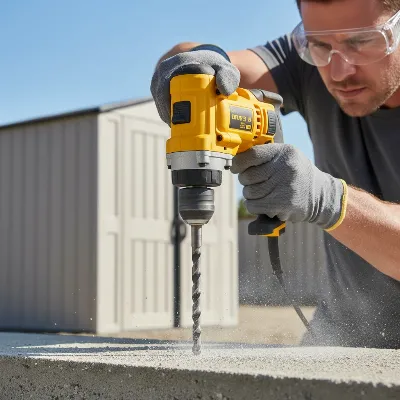 A person using a hammer drill with a masonry bit to drill into a concrete slab, with a resin shed in the background. Focus on the drill and concrete, showing safety goggles and gloves.
4. Install the Anchors
Now it’s time to insert your chosen anchors into the drilled holes:
- For Expansion Anchors: Gently tap them into the holes with a hammer until they are flush with the concrete surface.
- For Screw Anchors (Tapcon): Drive these directly into the pre-drilled holes using an impact driver. Ensure they are snug and secure, but be careful not to over-tighten, which can strip the threads or damage the concrete.
- For Epoxy Anchors: Follow the manufacturer’s instructions for mixing and applying the epoxy. Fill the hole about two-thirds full, then twist the anchor bolt into the epoxy. Allow the epoxy to cure completely before applying any load.
5. Secure the Shed to the Anchors
Carefully align the base of your resin shed over the installed anchors. For bolt-style anchors (expansion or galvanized bolts), place a fender washer over each anchor bolt, then thread a nut onto the bolt and tighten it with a wrench. The fender washer is particularly important here to distribute the pressure across the resin base. For screw anchors like Tapcons, simply drive them directly through the shed’s base frame and the fender washer into the concrete. Once all anchors are in place, give each one a final tightening to ensure a firm, unyielding connection.
6. Test Stability and Seal (Optional)
Once all anchors are secured, gently push against the sides of the shed to confirm its stability. There should be no noticeable wobble or movement. As an optional but recommended step, you can apply a bead of polyurethane caulk or sealant around the base of each anchor point. This helps prevent moisture intrusion into the drilled holes, protecting the concrete and anchors from water damage.
Common Mistakes to Avoid
Even seasoned DIY enthusiasts can sometimes overlook crucial details. To ensure your resin shed remains firmly anchored for years to come, steer clear of these common pitfalls:
- Ignoring Local Building Codes: Failing to check local regulations can lead to fines or the need for costly reinstallation. Building codes often dictate specific anchoring requirements for outdoor structures, especially in areas prone to high winds.
- Insufficient Site Preparation: Attempting to anchor a shed on an uneven or compromised concrete slab is a recipe for instability. Always ensure your foundation is level, clean, and in good repair before starting.
- Using the Wrong Drill Bit or Drill: A standard drill won’t suffice for concrete; a hammer drill or rotary hammer with masonry bits is essential for efficient and effective drilling. Using an incorrect bit can lead to poor hole quality or damaged tools.
- Not Cleaning Drill Holes: Concrete dust and debris left in the holes can prevent anchors from achieving a proper grip, significantly reducing their holding power. A wet/dry vacuum is indispensable for this step.
- Over-tightening or Under-tightening Anchors: Over-tightening can strip threads, crack concrete, or damage the shed’s base. Under-tightening leaves the shed vulnerable. Aim for a snug and secure fit, following anchor manufacturer guidelines.
- Neglecting Washers for Resin Sheds: Resin’s pliable nature makes it susceptible to damage from direct pressure. Large fender washers are vital for distributing the load and preventing the anchor heads from pulling through the plastic base, particularly in strong winds.
- Improper Anchor Spacing: Anchors placed too far apart may leave sections of the shed vulnerable. Ensure even distribution, typically at corners and every 6 feet along the perimeter, for optimal security.
> “The durability of your shed’s anchoring is only as strong as its weakest link. Proper preparation and the right fasteners are non-negotiable for lasting stability.” – John Peterson, Structural Engineering Consultant
Conclusion
Anchoring your resin storage shed to a concrete slab is a fundamental DIY project that provides essential stability, security, and protection against the elements. By carefully following the steps outlined in this guide – from selecting the correct tools and anchors to meticulously drilling and securing each point – you can ensure your resin shed stands firm against strong winds and adverse weather. This relatively simple investment of time and effort will safeguard your belongings and extend the lifespan of your shed, offering peace of mind for years to come. Remember, a securely anchored resin Storage Shed isn’t just about preventing it from blowing away; it’s about building a reliable and safe storage solution for your home.
Frequently Asked Questions
What type of anchors are best for resin sheds on concrete?
For resin sheds on concrete, screw anchors like Tapcon screws or expansion anchors are highly effective. Tapcons are often favored for their ease of installation and removability, while expansion anchors provide a very strong, permanent hold. Always use large fender washers to distribute the pressure on the shed’s plastic base.
Do all resin sheds need to be anchored?
Yes, it is highly recommended to anchor all resin sheds, regardless of size. Their lightweight nature makes them susceptible to strong winds, which can cause them to shift, lift, or even be blown away, potentially causing damage or injury. Anchoring ensures stability and security.
How many anchors do I need for my resin shed?
The number of anchors typically depends on the shed’s size and local wind conditions. A good rule of thumb is to place anchors at each corner of the shed and then space additional anchors every 4 to 6 feet along the perimeter of the shed’s base. Always check your shed’s manual for specific recommendations.
Can I anchor a resin shed to a concrete slab with cracks?
It is not advisable to anchor a resin shed to a cracked or damaged concrete slab. The cracks can compromise the integrity of the anchor’s hold, reducing its effectiveness. It’s best to repair the slab or pour a new one before anchoring your shed to ensure a stable foundation.
What tools are essential for this DIY project?
Key tools include a hammer drill (or rotary hammer) with masonry bits, an impact driver (for screw anchors) or a wrench/socket set (for bolts), a measuring tape, a marker, and a wet/dry vacuum to clean drill holes. Safety gear like goggles, gloves, and a dust mask are also crucial.