Securing your backyard storage shed effectively involves a strategic, layered approach combining physical deterrence, technological solutions, and smart habits, transforming it from a vulnerable target into a well-protected extension of your property. Sheds are often overlooked in home security, making them prime targets for opportunistic thieves due to weak door locks, exposed hinges, and fragile windows. Implementing robust security measures can significantly reduce the risk of theft and damage to your valuables.
Enhancing Your Storage Shed’s Security: A Comprehensive Guide
Securing your backyard storage shed involves understanding its potential weak points and implementing layered defenses. From its physical structure to advanced technology, every aspect can contribute to deterring would-be intruders and safeguarding your valuables. A proactive stance is crucial, as many sheds are not designed with robust security in mind, often featuring flimsy locks and exposed entry points.
Understanding Common Shed Vulnerabilities
Sheds are attractive to burglars for several reasons: they are often out of sight, contain easily sellable tools and equipment, and are typically easier to breach than a main house. Common vulnerabilities include weak door locks and latches, exposed hinges, fragile windows, and an unsecured foundation. Depending on the shed’s material—whether wood, metal, or plastic—certain weaknesses may be more pronounced. Wooden sheds, for example, can suffer from rotten wood, creating weak points that are easily compromised, while standard metal or plastic sheds might be lighter and easier to dislodge if not properly anchored.
Fortifying Doors and Entry Points
The door is often the primary point of entry for intruders, making its reinforcement paramount. Start by upgrading to a high-security lock. While basic padlocks are common, a closed-shackle padlock made from hardened steel makes it significantly harder for bolt cutters to get a grip. For added security, consider a heavy-duty hasp and staple, ensuring it’s secured with carriage bolts that cannot be unscrewed from the outside.
Many sheds come with hinges fastened by shallow screws that are easily removed. Replace these with longer, tamper-resistant screws or, ideally, carriage bolts that pass through the door and frame, preventing external removal. For outward-opening doors, interior hinges offer superior protection. Adding a shed security bar that spans the entire width of the door can also effectively prevent prying attempts, creating a robust physical barrier.
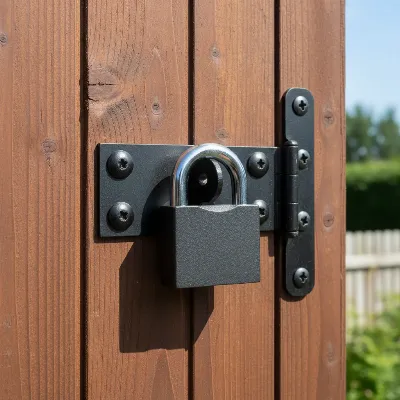 Close-up of a reinforced shed door with a heavy-duty padlock and secure hinges
Protecting Windows from Intruders
Shed windows offer both visibility for thieves to scope out contents and a potential entry point. Obscuring visibility is a simple yet effective first step. Apply frosted film, use opaque plastic coverings, or simply hang curtains or blinds to keep valuables out of sight.
For physical security, consider replacing fragile glass panes with shatter-resistant plastic or Perspex. Installing metal window bars or grilles provides a strong physical barrier, while ventlocks allow for ventilation while restricting the window’s opening to a small gap. Window alarms, which trigger a loud siren if the window is opened or broken, add another layer of deterrence. Ensure any window reinforcements are securely fastened to prevent easy removal.
Structural Integrity: Anchoring and Reinforcement
|
Our Picks for the Best Storage Shed in 2026
As an Amazon Associate I earn from qualifying purchases.
|
||
| Num | Product | Action |
|---|---|---|
| 1 | Happy Travel Bike Storage Tent Shed, Outdoor Waterproof Bicycle Covers Shelter with Window for 2/3/4/6/8 Bikes,Oversized Outside Portable Sheds for Lawn Mower,Garden Tools |

|
| 2 | Bike Storage Shed Tent,Bike Cover Waterproof Outdoor Storage Shed with 30% More Top Storage Space for 4-5Bikes,Portable Bicycle Shelter for Motorcycle,Garden Tools,Lawn Mower |
|
| 3 | Bike Tent, 81 * 39 * 65 in Outdoor Portable Storage Sheds, 210D Oxford Thick Waterproof Fabric,PU4000 Waterproof for 2/3/4 Bikes,Bike Covers for Motorcycle,Garden Tools,Lawn Mower |
|
| 4 | Happy Travel Bike Storage Tent Shed, Outdoor Waterproof Bicycle Covers Shelter with Window for 2/4/6/8 Bikes,Oversized Outside Portable Sheds for Lawn Mower,Garden Tools (Black) |
|
| 5 | Happy Travel Bike Storage Tent, Outdoor 8×7×6.3ft Large 2-in-1 Portable Shed More 30% Top Space W/Double Doors with Mesh, Outside Lawn Mower Shelter and Bicycle Cover for Patio Furniture, Garden Tools |
|
| 6 | Bike Storage Tent,for 2-10 Bikes, 118 x 86 x 72 in Outdoor Portable Bike Storage, 210D Oxford Fabric PU4000 Waterproof, 2 Rolling Doors, for Motorcycles or Large Motorcycles, Without Floor |
|
| 7 | Housolution Bike Storage Tent Shed for 5 Bikes, Outdoor Portable 210D Oxford Thick PU4000 Waterproof Bike Cover with Ventilated Window, Bike Tent Fit for Bicycle, Lawn Mower, Garden Tools |
|
| 8 | Happy Travel Bike Storage Shed Tent,Outdoor Portable Bicycle Storage Sheds with 210D Oxford Fabric PU4000 Waterproof for 2/3/4/6/8 Bikes,Bike Covers Shelter for Motorcycle,Garden Tools,Toys,Lawn Mower |
|
| 9 | 39.4" Larger Storage Shed Tent for Bike Motorcycle ebike eScooter Lawn Mower Outdoor Canopy Shelter Protection with Water Resistant Dustproof Windproof and Sunproof for RV Travel |
|
| 10 | Bike Storage Shed Tent, Outdoor Bicycle Storage Shed, Waterproof Portable Bike Covers Shelter, 7.2x4.9x6.1ft Large Garage Tent for Motorcycle, Garden Tools, Lawn Mower |
|
An often-overlooked aspect of shed security is its structural integrity and anchoring to the ground. An unsecured shed can be lifted or moved, especially lighter models. For sheds on a concrete slab, use concrete anchors or expansion bolts to secure the base directly to the slab. If your shed rests on bare ground or a gravel base, auger-style ground anchors screwed deep into the soil provide vital stability, connecting to the shed’s frame with brackets or cables.
Regular maintenance is also crucial. Fix any rotten wood immediately, as it creates a weak point susceptible to forced entry. Reinforcing the shed’s roof and frame can prevent break-ins through these less common but still vulnerable areas. A strong foundation and robust structure make the shed less appealing as a target.
Deterring Thieves with Lights and Cameras
Visibility is a double-edged sword: you want to see your shed, but not make it an easy target. Strategic placement, visible from your home but out of plain sight from the street, is ideal. Beyond location, active deterrents like motion-sensor lights and security cameras can significantly boost security.
Motion-sensor lights automatically illuminate the area when movement is detected, startling potential intruders and making them visible. Solar-powered options are excellent for sheds without mains electricity. Security cameras, whether real or dummy units, act as a strong visual deterrent. If real, they can provide valuable evidence and often offer remote monitoring via a smartphone app. Positioning cameras and lights to cover all entry points and blind spots is key. Gravel paths around the shed can also help, as the crunching sound alerts you to approaching footsteps.
Leveraging Smart Technology for Advanced Protection
For those seeking advanced security, smart home technology offers sophisticated solutions for storage sheds. Smart locks, controllable via your smartphone, eliminate the need for physical keys, allow remote access granting, and can even feature built-in alarms that trigger upon tampering. Keypad and biometric locks provide keyless entry using codes or fingerprints.
Integrating your shed security with a broader smart home ecosystem enhances protection. Motion-activated security cameras can send real-time alerts to your phone, while smart lighting systems can automatically illuminate the area when movement is detected. Wireless alarm systems with door/window sensors or PIR (passive infrared) motion sensors can immediately alert you to unauthorized entry, providing peace of mind even when you’re away from home. These systems are often easy to install and scalable to fit your specific needs.
> “A layered security approach is always best. Don’t rely on just one lock; combine physical barriers with smart technology for comprehensive protection.” – Jordan Miller, Home Security Specialist
Detailed Comparison of Key Security Measures
Choosing the right security measures for your storage shed can feel overwhelming. Here’s a comparison of common solutions to help you make informed decisions:
| Security Measure | Cost (Estimated) | Effectiveness | Installation Difficulty | Key Features |
|---|---|---|---|---|
| High-Security Padlocks | Low to Moderate | High | Easy | Hardened steel, closed shackle, weather-resistant |
| Reinforced Hinges | Low | High | Moderate | Carriage bolts, internal fixing |
| Shed Security Bars | Moderate | High | Moderate | Spans door width, prevents prying, visible deterrent |
| Window Bars/Grilles | Moderate | High | Moderate | Physical barrier, custom-fit, tamper-proof fixings |
| Ground Anchors | Low to Moderate | High | Moderate | Secures shed to ground/foundation, prevents movement/lifting |
| Motion-Sensor Lights | Low to Moderate | Moderate | Automatic illumination, visible deterrent, solar/battery options | |
| Security Cameras | Moderate to High | High | Moderate | Visual deterrent, remote monitoring, alerts, evidence recording |
| Shed Alarms | Low to Moderate | High | Easy | Siren alerts, door/window sensors, motion detection |
| Smart Locks | Moderate to High | High | Moderate | Keyless entry, remote control, tamper alerts, integration with smart home |
| Frosted Window Film | Very Low | Moderate | Easy | Obscures view, allows light, inexpensive |
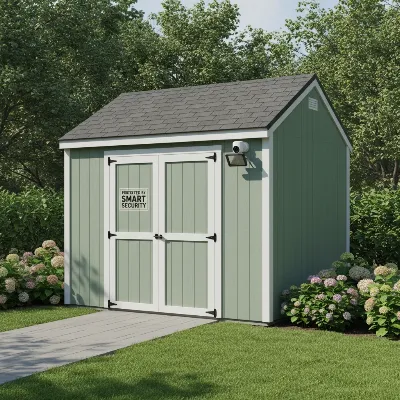 An overview of a secure backyard shed featuring smart security integrations
Implementing Your Shed Security Plan: A Step-by-Step Approach
Securing your shed is a process, not a one-time task. By following these steps, you can create a comprehensive security plan:
- Assess Current Vulnerabilities: Walk around your shed. Identify weak locks, exposed hinges, fragile windows, and any points that seem easy to compromise. Check the integrity of the shed’s material.
- Upgrade Physical Barriers: Start with the basics. Replace standard locks with high-security options. Reinforce hinges with carriage bolts and consider adding a security bar to the door.
- Address Windows: Obscure visibility into the shed with film or coverings. If possible, replace glass with tougher materials or install window bars.
- Anchor Your Shed: Ensure your shed is securely anchored to the ground or its foundation to prevent it from being moved or lifted.
- Illuminate the Area: Install motion-sensor lighting around the shed to deter nocturnal intruders and increase visibility.
- Add Surveillance and Alarms: Set up security cameras to monitor activity and install a shed alarm system with door/window sensors or motion detectors.
- Conceal Valuables: Store expensive items away from windows and consider using internal anchors for high-value equipment like bicycles.
- Maintain Your Shed: Regularly inspect your shed for wear and tear, fixing any rotten wood or damaged areas that could become weak points.
- Check Insurance: Verify that your homeowner’s insurance policy covers items stored in your shed.
Beyond Storage: Creative Uses and Security Considerations
Storage sheds are no longer just for gardening tools. Many homeowners transform them into home offices, art studios, small gyms, or even playhouses. When using your shed for these creative purposes, security becomes even more critical due to the increased value of contents and the potential for regular occupancy. Consider higher-grade insulation, more robust doors and windows, and a fully integrated smart security system, similar to what you’d use for your main home. Protecting these unique spaces demands attention to detail, balancing functionality with uncompromising security.
Conclusion
The security of your backyard storage shed is an integral part of your property’s overall safety. By thoughtfully evaluating vulnerabilities and implementing a combination of robust physical defenses, smart deterrents, and modern technology, you can significantly reduce the risk of theft and damage. From a heavy-duty padlock and reinforced hinges to motion-sensor lights and smart cameras, each layer of security adds to the peace of mind you deserve. Take the time to secure your shed today; your valuables, and your serenity, are worth protecting. What steps will you take to enhance your shed’s security this weekend?
Frequently Asked Questions
What kind of lock is best for a storage shed?
The best lock for a storage shed is typically a high-security, closed-shackle padlock made from hardened steel, combined with a sturdy hasp and staple. Deadbolts or smart locks can also provide excellent security, particularly when reinforced with tamper-resistant screws or carriage bolts for ultimate protection.
How can I secure my shed windows effectively?
To secure shed windows, obscure the view with frosted film or curtains, replace glass with shatter-resistant plastic, or install metal window bars or grilles. Window alarms and ventlocks, which allow ventilation but prevent large openings, can also add layers of protection to deter intruders.
Is anchoring a shed to the ground really necessary?
Yes, anchoring a shed to the ground is highly recommended, especially for lighter models or in areas prone to strong winds. Proper anchoring prevents the shed from being lifted, shifted, or toppled, adding a critical layer of security against both theft and environmental damage.
Do motion-sensor lights actually deter thieves from sheds?
Motion-sensor lights are effective deterrents because they suddenly illuminate an area when movement is detected, startling potential intruders and making them feel exposed. This can significantly reduce the likelihood of a break-in, especially when combined with other security measures like cameras or alarms.
Can smart home technology be used for shed security?
Absolutely. Smart home technology, including smart locks, motion-activated cameras, and wireless alarm systems, can be seamlessly integrated into your shed security plan. These systems offer features like remote monitoring, real-time alerts, and keyless access, providing enhanced control and peace of mind.
What are common mistakes homeowners make with shed security?
Common mistakes include using flimsy, easily broken locks, leaving hinges exposed, not obscuring shed windows, failing to anchor the shed, and neglecting regular maintenance that can lead to weak points. Overlooking these basic security measures leaves sheds vulnerable to opportunistic theft.
How often should I check my shed’s security?
It’s advisable to perform a quick security check on your shed weekly, ensuring all locks are engaged and there are no obvious signs of tampering. A more thorough inspection, including checking hinges, window integrity, and structural stability, should be done at least quarterly.
Frequently Asked Questions
What kind of lock is best for a storage shed?
The best lock for a storage shed is typically a high-security, closed-shackle padlock made from hardened steel, combined with a sturdy hasp and staple. Deadbolts or smart locks can also provide excellent security, particularly when reinforced with tamper-resistant screws or carriage bolts for ultimate protection.
How can I secure my shed windows effectively?
To secure shed windows, obscure the view with frosted film or curtains, replace glass with shatter-resistant plastic, or install metal window bars or grilles. Window alarms and ventlocks, which allow ventilation but prevent large openings, can also add layers of protection to deter intruders.
Is anchoring a shed to the ground really necessary?
Yes, anchoring a shed to the ground is highly recommended, especially for lighter models or in areas prone to strong winds. Proper anchoring prevents the shed from being lifted, shifted, or toppled, adding a critical layer of security against both theft and environmental damage.
Do motion-sensor lights actually deter thieves from sheds?
Motion-sensor lights are effective deterrents because they suddenly illuminate an area when movement is detected, startling potential intruders and making them feel exposed. This can significantly reduce the likelihood of a break-in, especially when combined with other security measures like cameras or alarms.
Can smart home technology be used for shed security?
Absolutely. Smart home technology, including smart locks, motion-activated cameras, and wireless alarm systems, can be seamlessly integrated into your shed security plan. These systems offer features like remote monitoring, real-time alerts, and keyless access, providing enhanced control and peace of mind.
What are common mistakes homeowners make with shed security?
Common mistakes include using flimsy, easily broken locks, leaving hinges exposed, not obscuring shed windows, failing to anchor the shed, and neglecting regular maintenance that can lead to weak points. Overlooking these basic security measures leaves sheds vulnerable to opportunistic theft.
Implement Your Shed Security Plan
Follow these steps to create a comprehensive security plan for your backyard storage shed, ensuring your valuables are protected.
Walk around your shed to identify weak locks, exposed hinges, fragile windows, and any points that seem easy to compromise. Check the integrity of the shed's material for potential weaknesses.
Replace standard locks with high-security options like closed-shackle padlocks made from hardened steel. Reinforce hinges with carriage bolts and consider adding a security bar to the door for enhanced protection.
Obscure visibility into the shed with frosted film or coverings to keep valuables out of sight. If possible, replace glass with tougher materials like shatter-resistant plastic or install metal window bars.
Ensure your shed is securely anchored to the ground or its foundation using concrete anchors or auger-style ground anchors. This prevents it from being moved, lifted, or toppled by thieves or strong winds.
Install motion-sensor lighting around the shed to deter nocturnal intruders and increase visibility. Set up security cameras to monitor activity and install a shed alarm system with door/window sensors or motion detectors for immediate alerts.

I’ve been looking for ways to protect my gardening equipment, and the suggestion to use ground anchors for larger items was a game-changer. I never thought of securing things to the floor! It gives me peace of mind knowing my expensive lawnmower and rototiller aren’t just sitting there for anyone to walk off with.
The ideas for window security were helpful, but I found it a bit tricky to install the security film on my older shed windows. It took a few tries to get it bubble-free, and it’s not as invisible as I hoped. Still, it’s better than nothing for deterring a quick smash-and-grab.
I really appreciate the tip about reinforcing the shed door frame. I always thought a good padlock was enough, but after reading about how easy it is to pry open a weak frame, I went out and added some metal plates. It feels much more secure now, especially with my power tools stored inside. Great advice!
The section on smart lighting and motion sensors was exactly what I needed. I installed a solar-powered motion light near my shed door, and it’s made a huge difference. Not only does it deter potential intruders, but it’s also super convenient when I’m getting tools out at night. Highly recommend this approach!