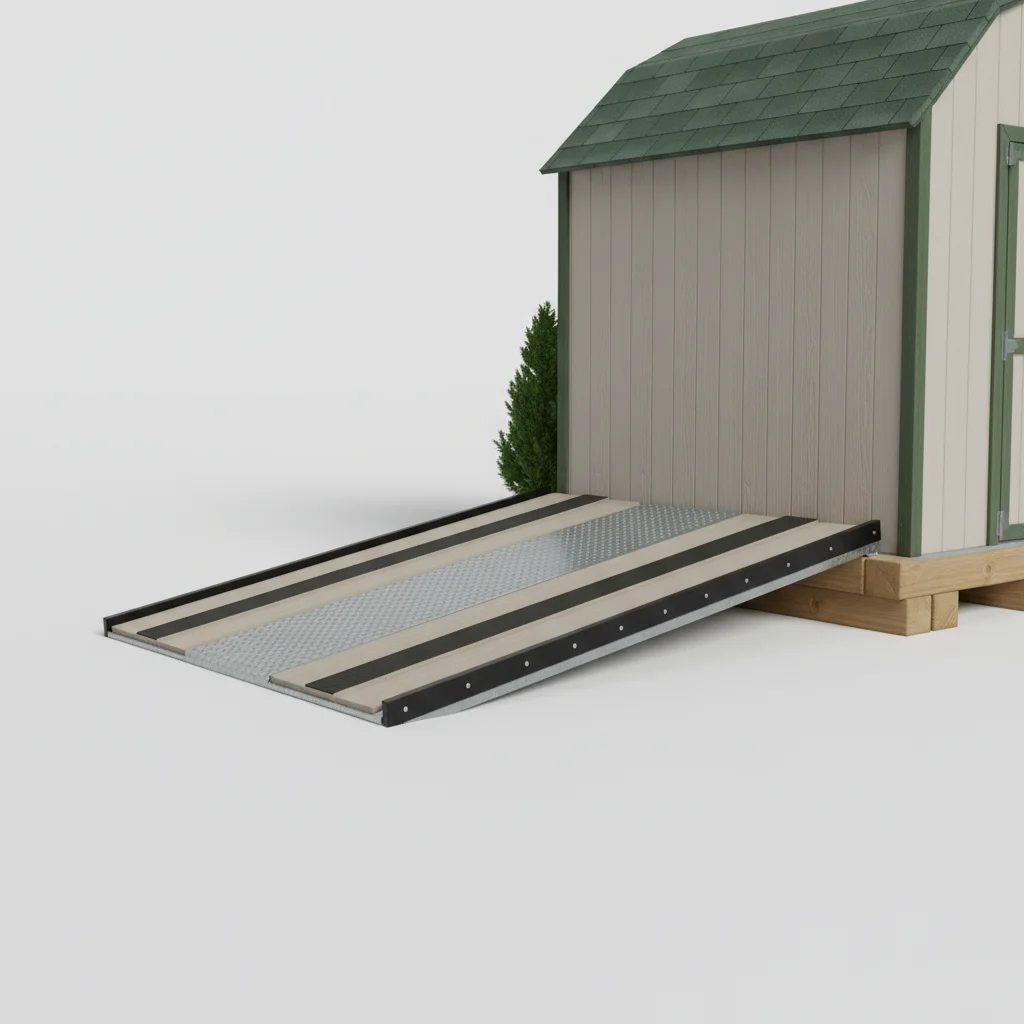
Choosing the right storage shed ramp is crucial for safe and easy access, especially when moving heavy equipment or wheeled items. There are typically three main types of ramps to consider: wooden, metal, and plastic, each offering distinct advantages in terms of durability, weight capacity, and cost. Selecting the appropriate ramp ensures longevity and prevents potential damage to your shed or its contents.
Understanding Different Ramp Materials
Wooden ramps are a popular DIY option, offering customization in size and slope. They are generally robust and can be built to match the aesthetic of your shed. However, they require regular maintenance, such as sealing and painting, to prevent rot and insect damage, especially in Utah’s varied climate. The weight capacity of a wooden ramp depends heavily on the type of wood used and the construction method. For expert outdoor storage reviews on this site.
Metal ramps, often made from aluminum or steel, are known for their high durability and impressive weight capacities. Aluminum ramps are lightweight and rust-resistant, making them ideal for frequent use and harsh weather conditions. Steel ramps, while heavier, offer superior strength and are often more affordable than aluminum. Both metal options typically require less maintenance than wood.
Plastic or resin ramps are lightweight, weather-resistant, and often the most budget-friendly choice. They are easy to install and clean, making them suitable for lighter loads like lawnmowers or wheelbarrows. However, their weight capacity is generally lower than wood or metal ramps, and they may not withstand extreme temperatures or heavy impacts as effectively.
Key Factors When Selecting Your Ramp
|
Our Picks for the Best Storage Shed in 2026
As an Amazon Associate I earn from qualifying purchases.
|
||
| Num | Product | Action |
|---|---|---|
| 1 | Bike Storage Tent,for 2-10 Bikes, 118 x 86 x 72 in Outdoor Portable Bike Storage, 210D Oxford Fabric PU4000 Waterproof, 2 Rolling Doors, for Motorcycles or Large Motorcycles, Without Floor |

|
| 2 | Happy Travel Bike Storage Shed Tent,Outdoor Portable Bicycle Storage Sheds with 210D Oxford Fabric PU4000 Waterproof for 2/3/4/6/8 Bikes,Bike Covers Shelter for Motorcycle,Garden Tools,Toys,Lawn Mower |
|
| 3 | Happy Travel Bike Storage Tent, Outdoor 8×7×6.3ft Large 2-in-1 Portable Shed More 30% Top Space W/Double Doors with Mesh, Outside Lawn Mower Shelter and Bicycle Cover for Patio Furniture, Garden Tools |
|
| 4 | Happy Travel Bike Storage Tent Shed, Outdoor Waterproof Bicycle Covers Shelter with Window for 2/4/6/8 Bikes,Oversized Outside Portable Sheds for Lawn Mower,Garden Tools (Black) |
|
| 5 | Bike Storage Shed Tent,Bike Cover Waterproof Outdoor Storage Shed with 30% More Top Storage Space for 4-5Bikes,Portable Bicycle Shelter for Motorcycle,Garden Tools,Lawn Mower |
|
| 6 | Bike Tent, 81 * 39 * 65 in Outdoor Portable Storage Sheds, 210D Oxford Thick Waterproof Fabric,PU4000 Waterproof for 2/3/4 Bikes,Bike Covers for Motorcycle,Garden Tools,Lawn Mower |
|
| 7 | Bike Storage Shed Tent, Outdoor Bicycle Storage Shed, Waterproof Portable Bike Covers Shelter, 7.2x4.9x6.1ft Large Garage Tent for Motorcycle, Garden Tools, Lawn Mower |
|
| 8 | 39.4" Larger Storage Shed Tent for Bike Motorcycle ebike eScooter Lawn Mower Outdoor Canopy Shelter Protection with Water Resistant Dustproof Windproof and Sunproof for RV Travel |
|
| 9 | Housolution Bike Storage Tent Shed for 5 Bikes, Outdoor Portable 210D Oxford Thick PU4000 Waterproof Bike Cover with Ventilated Window, Bike Tent Fit for Bicycle, Lawn Mower, Garden Tools |
|
| 10 | Happy Travel Bike Storage Tent Shed, Outdoor Waterproof Bicycle Covers Shelter with Window for 2/3/4/6/8 Bikes,Oversized Outside Portable Sheds for Lawn Mower,Garden Tools |
|
When selecting a storage shed ramp, consider the weight of the items you’ll be moving. A ramp designed for a push mower will not suffice for an ATV or riding lawnmower. Measure the height of your shed’s floor from the ground to determine the necessary ramp length for a safe incline. A general rule of thumb is a 1:12 slope (1 inch of rise for every 12 inches of run) for comfortable use, though steeper slopes might be acceptable for lighter items.
Also, think about the ramp’s surface. A non-slip surface is essential, especially in wet or icy conditions. Many metal and plastic ramps come with textured surfaces or grip tape. For wooden ramps, adding anti-slip strips or a textured paint can significantly improve safety. Finally, consider the ease of installation and whether the ramp needs to be portable or permanently affixed to your shed.
Installation and Maintenance Tips
Proper installation is key to a safe and functional ramp. Ensure the ramp is securely attached to the shed’s threshold to prevent slippage during use. For wooden ramps, use treated lumber and strong fasteners. Metal ramps often come with pre-drilled holes for easy attachment. Always follow the manufacturer’s instructions for installation to ensure maximum safety and weight capacity.
- Regularly inspect your ramp for wear and tear, especially after heavy use or adverse weather.
- Clean the ramp surface to remove dirt, debris, or ice that could create a slipping hazard.
- For wooden ramps, reapply sealants or paint every 1-2 years to protect against moisture and UV damage.
- Check fasteners and connections periodically to ensure they remain tight and secure.
- Store portable ramps in a dry place when not in use to extend their lifespan.
By considering these factors, you can choose a storage shed ramp that provides reliable access for years to come.Investing in a quality ramp not only makes your life easier but also protects your valuable equipment and ensures safety.

After struggling with a makeshift ramp for too long, I decided to get a proper one. The information on different ramp materials was super helpful. I ended up with a heavy-duty metal ramp, and it’s made a world of difference for getting my snowblower in and out. No more back strain!
I finally got around to adding a ramp to my shed, and I’m so glad I went with an aluminum one. Moving my lawnmower in and out used to be such a pain, but now it’s a breeze. The lightweight design is a huge plus, and it feels really sturdy. Definitely recommend investing in a good metal ramp for heavy equipment.
I picked up a plastic ramp for my small garden shed, mainly for moving lighter items like wheelbarrows. It works okay for that, but I wouldn’t trust it with anything too heavy. It feels a bit flimsy compared to what I was expecting, and I worry about its longevity in the sun. Next time I might go for a metal one.
I built a wooden ramp for my shed a few years ago, and it’s held up pretty well. The customization was great for matching my shed’s look. My only complaint is the maintenance; I really need to get around to resealing it again before winter. It’s a solid option if you don’t mind a bit of upkeep.