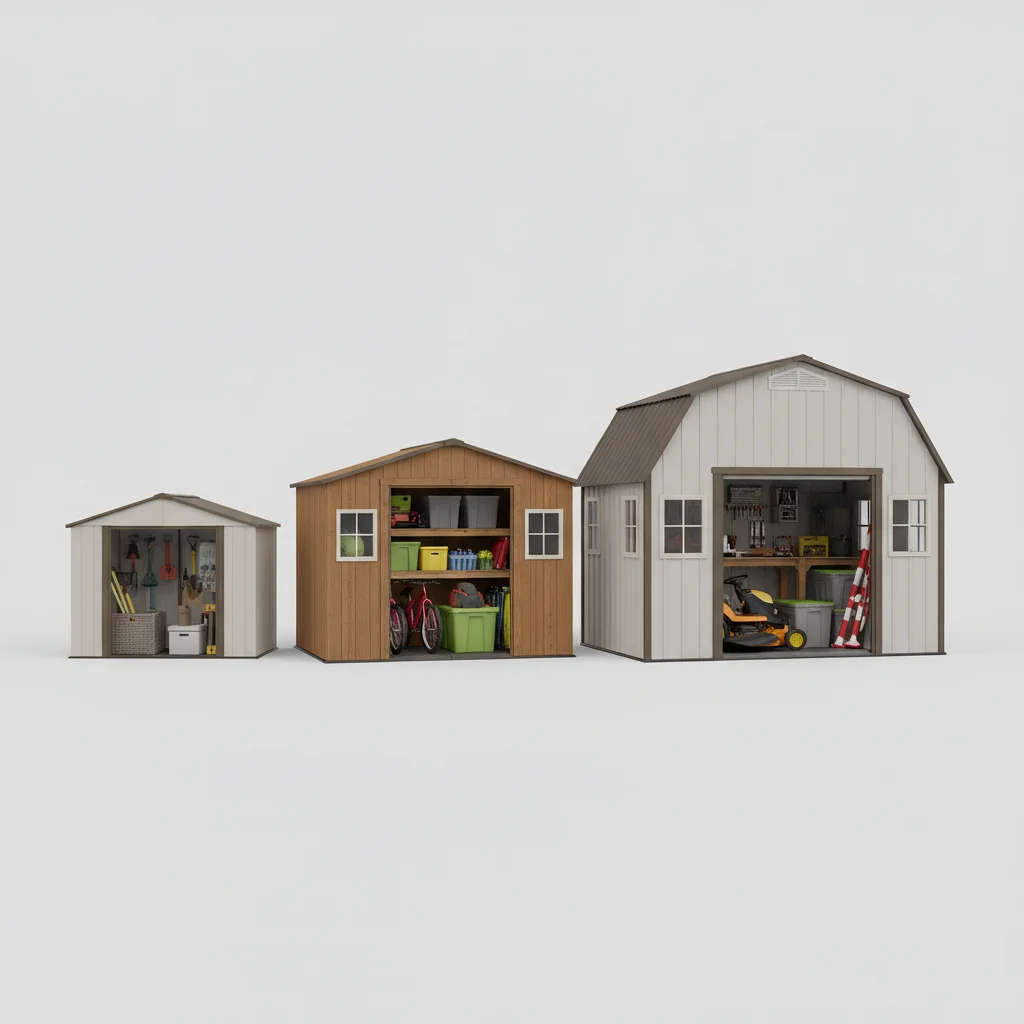
Choosing the right size storage shed for your backyard involves a careful assessment of your current and future storage needs, available space, and local regulations. Most homeowners find that a 10×12 foot shed offers a versatile balance, providing ample room for common tools and equipment without overwhelming a typical backyard. However, smaller 6×8 foot sheds are ideal for minimal storage, while larger 12×20 foot options cater to extensive needs or workshop aspirations.
Assess Your Current Storage Needs
Before you even think about dimensions, take stock of everything you plan to store. This isn’t just about what you have now, but also what you anticipate acquiring in the next few years. Group items by category: garden tools, lawn equipment, seasonal decorations, sports gear, and so on. Measure the largest items, such as lawnmowers, ATVs, or large workbenches, as these will dictate the minimum footprint required. Don’t forget vertical space; shelves and hooks can significantly increase a shed’s capacity, so consider the height of items like rakes and shovels.
Consider Your Available Backyard Space
The physical space in your backyard is a critical limiting factor. Measure the area where you intend to place the shed, ensuring you account for setbacks from property lines, fences, and other structures as required by local zoning laws. Also, consider accessibility for construction and future use. You’ll need room to open doors and windows, and to maneuver items in and out. A common mistake is to select a shed that, while fitting the footprint, makes the rest of the yard feel cramped or obstructs pathways.
- Measure the exact footprint available for the shed.
- Account for local zoning setbacks and easements.
- Ensure adequate clearance for doors, windows, and access.
- Visualize the shed’s impact on overall yard aesthetics.
- Plan for future landscaping or garden beds around the shed.
Future-Proofing Your Storage Solution
|
Our Picks for the Best Storage Shed in 2026
As an Amazon Associate I earn from qualifying purchases.
|
||
| Num | Product | Action |
|---|---|---|
| 1 | 39.4" Larger Storage Shed Tent for Bike Motorcycle ebike eScooter Lawn Mower Outdoor Canopy Shelter Protection with Water Resistant Dustproof Windproof and Sunproof for RV Travel |

|
| 2 | Bike Storage Shed Tent, Outdoor Bicycle Storage Shed, Waterproof Portable Bike Covers Shelter, 7.2x4.9x6.1ft Large Garage Tent for Motorcycle, Garden Tools, Lawn Mower |
|
| 3 | Bike Storage Tent,for 2-10 Bikes, 118 x 86 x 72 in Outdoor Portable Bike Storage, 210D Oxford Fabric PU4000 Waterproof, 2 Rolling Doors, for Motorcycles or Large Motorcycles, Without Floor |
|
| 4 | Bike Storage Shed Tent,Bike Cover Waterproof Outdoor Storage Shed with 30% More Top Storage Space for 4-5Bikes,Portable Bicycle Shelter for Motorcycle,Garden Tools,Lawn Mower |
|
| 5 | Happy Travel Bike Storage Tent Shed, Outdoor Waterproof Bicycle Covers Shelter with Window for 2/4/6/8 Bikes,Oversized Outside Portable Sheds for Lawn Mower,Garden Tools (Black) |
|
| 6 | Happy Travel Bike Storage Tent Shed, Outdoor Waterproof Bicycle Covers Shelter with Window for 2/3/4/6/8 Bikes,Oversized Outside Portable Sheds for Lawn Mower,Garden Tools |
|
| 7 | Happy Travel Bike Storage Tent, Outdoor 8×7×6.3ft Large 2-in-1 Portable Shed More 30% Top Space W/Double Doors with Mesh, Outside Lawn Mower Shelter and Bicycle Cover for Patio Furniture, Garden Tools |
|
| 8 | Housolution Bike Storage Tent Shed for 5 Bikes, Outdoor Portable 210D Oxford Thick PU4000 Waterproof Bike Cover with Ventilated Window, Bike Tent Fit for Bicycle, Lawn Mower, Garden Tools |
|
| 9 | Happy Travel Bike Storage Shed Tent,Outdoor Portable Bicycle Storage Sheds with 210D Oxford Fabric PU4000 Waterproof for 2/3/4/6/8 Bikes,Bike Covers Shelter for Motorcycle,Garden Tools,Toys,Lawn Mower |
|
| 10 | Bike Tent, 81 * 39 * 65 in Outdoor Portable Storage Sheds, 210D Oxford Thick Waterproof Fabric,PU4000 Waterproof for 2/3/4 Bikes,Bike Covers for Motorcycle,Garden Tools,Lawn Mower |
|
While it’s tempting to buy a shed that perfectly fits your current needs, it’s wise to think ahead. Will your family grow? Do you plan on taking up new hobbies that require more equipment? Many people regret buying a shed that is too small within a few years. Aim for at least 10-20% more space than you initially calculate you need. This buffer allows for unexpected purchases, seasonal items, and the natural accumulation of household goods. It’s far more cost-effective to buy a slightly larger shed upfront than to replace a too-small one later.
Understanding Common Shed Sizes and Their Uses
Sheds come in a wide range of standard sizes, each suited for different purposes. Small sheds (6×8 feet or less) are perfect for basic garden tools, a few bags of soil, and perhaps a small lawnmower. Medium sheds (8×10 to 10×12 feet) are the most popular, accommodating larger lawn equipment, bicycles, and a good amount of general storage. Large sheds (10×16 feet and up) can serve as workshops, house riding lawnmowers, or store significant amounts of outdoor gear. Always consider the internal dimensions, as wall thickness can reduce usable space.
Local Regulations and Permits
Before making any purchase, check with your local municipality or homeowner’s association regarding building codes, permits, and size restrictions for accessory structures like sheds. Many areas have limits on the maximum height, footprint, and proximity to property lines. Ignoring these regulations can lead to fines or even the forced removal of your shed. It’s always better to be informed and compliant from the outset.

I’m so glad I read up on shed sizes before buying! I was originally thinking of a smaller 6×8, but after really assessing my current and future storage needs, I realized that wouldn’t cut it. The 10×12 shed I ended up getting is perfect for my lawnmower, garden tools, and even some seasonal decor. It fits great in my backyard without looking too big.
I was totally overwhelmed by all the options for outdoor storage sheds. This really broke down the different sizes and what they’re good for. I only needed a place for a few garden tools and some potting supplies, so the suggestion for a smaller 6×8 foot shed was spot on for my minimal storage needs. It was easy to assemble and looks great.
This was super helpful for figuring out what I actually needed. I have a lot of sports gear and a small ATV, so I knew I’d need something substantial. The advice about measuring the largest items was key. I went with a 12×20 foot option and it’s been fantastic for keeping everything organized and out of the garage. Definitely recommend taking the time to plan it out.
The information on local regulations was a good reminder, but I wish there was more detail on how to actually find that info for my specific area. I ended up spending a lot of time on my city’s website. The shed itself is fine, I got a 10×12, but the permitting process was a bit of a headache.