Transforming a simple storage shed into a functional workshop, a cozy retreat, or a vibrant creative space often requires one crucial upgrade: electricity. Powering your shed can unlock its full potential, providing essential lighting, enabling power tools, or even allowing for climate control. However, bringing electricity to an outdoor structure is a significant undertaking that demands careful planning, adherence to safety standards, and often, professional expertise. Rushing this process or cutting corners can lead to serious hazards, including fire, electric shock, or costly rework. This comprehensive guide will walk you through everything you need to know to safely and effectively electrify your storage shed, ensuring a reliable and secure power supply for years to come.
Planning Your Storage Shed’s Electrical System
Before any wires are laid or trenches are dug, thorough planning is paramount. This initial phase sets the foundation for a safe, efficient, and code-compliant electrical system for your shed.
Assessing Your Power Needs
|
Our Picks for the Best Storage Shed in 2026
As an Amazon Associate I earn from qualifying purchases.
|
||
| Num | Product | Action |
|---|---|---|
| 1 | Bike Storage Shed Tent,Bike Cover Waterproof Outdoor Storage Shed with 30% More Top Storage Space for 4-5Bikes,Portable Bicycle Shelter for Motorcycle,Garden Tools,Lawn Mower |

|
| 2 | Bike Storage Shed Tent, Outdoor Bicycle Storage Shed, Waterproof Portable Bike Covers Shelter, 7.2x4.9x6.1ft Large Garage Tent for Motorcycle, Garden Tools, Lawn Mower |
|
| 3 | 39.4" Larger Storage Shed Tent for Bike Motorcycle ebike eScooter Lawn Mower Outdoor Canopy Shelter Protection with Water Resistant Dustproof Windproof and Sunproof for RV Travel |
|
| 4 | Bike Tent, 81 * 39 * 65 in Outdoor Portable Storage Sheds, 210D Oxford Thick Waterproof Fabric,PU4000 Waterproof for 2/3/4 Bikes,Bike Covers for Motorcycle,Garden Tools,Lawn Mower |
|
| 5 | Bike Storage Tent,for 2-10 Bikes, 118 x 86 x 72 in Outdoor Portable Bike Storage, 210D Oxford Fabric PU4000 Waterproof, 2 Rolling Doors, for Motorcycles or Large Motorcycles, Without Floor |
|
| 6 | Happy Travel Bike Storage Tent Shed, Outdoor Waterproof Bicycle Covers Shelter with Window for 2/3/4/6/8 Bikes,Oversized Outside Portable Sheds for Lawn Mower,Garden Tools |
|
| 7 | Happy Travel Bike Storage Shed Tent,Outdoor Portable Bicycle Storage Sheds with 210D Oxford Fabric PU4000 Waterproof for 2/3/4/6/8 Bikes,Bike Covers Shelter for Motorcycle,Garden Tools,Toys,Lawn Mower |
|
| 8 | Housolution Bike Storage Tent Shed for 5 Bikes, Outdoor Portable 210D Oxford Thick PU4000 Waterproof Bike Cover with Ventilated Window, Bike Tent Fit for Bicycle, Lawn Mower, Garden Tools |
|
| 9 | Happy Travel Bike Storage Tent Shed, Outdoor Waterproof Bicycle Covers Shelter with Window for 2/4/6/8 Bikes,Oversized Outside Portable Sheds for Lawn Mower,Garden Tools (Black) |
|
| 10 | Happy Travel Bike Storage Tent, Outdoor 8×7×6.3ft Large 2-in-1 Portable Shed More 30% Top Space W/Double Doors with Mesh, Outside Lawn Mower Shelter and Bicycle Cover for Patio Furniture, Garden Tools |
|
The first step is to determine exactly what you intend to power in your shed. Will it be basic lighting and a few outlets for hand tools? Or do you envision a fully equipped workshop with heavy machinery, a dedicated heater or air conditioning unit, and multiple power-hungry appliances? List every item and find its wattage. Remember that some tools have a higher “starting wattage” (the initial surge needed to turn on) than their “running wattage” (continuous power usage). Summing up the wattage of all devices you expect to run simultaneously will give you a baseline. It’s also wise to anticipate future needs; overestimating slightly now can save you from an undersized system and expensive upgrades later. This calculation will help determine the necessary circuit amperage and wire gauge.
Understanding Local Codes and Permits
In almost every jurisdiction, running new electrical wiring to an outbuilding like a shed requires an electrical permit from your local building department. These regulations, often based on the National Electrical Code (NEC) or similar standards, are not just bureaucratic hurdles; they are crucial safeguards designed to protect you and your property from electrical hazards such as fires or shocks. Contact your local authorities early in the planning process to understand specific requirements, burial depths for cables, wire types, and inspection schedules. Skipping this step can lead to fines, difficulties with homeowner’s insurance, or forced removal and reinstallation of unpermitted work during a home sale. Typically, you’ll need at least two inspections: a “rough-in” inspection before any wiring is concealed and a “final” inspection once the system is complete.
Choosing Your Wiring Method: Overhead vs. Underground
There are two primary methods for delivering power from your main house panel to your shed, each with its own advantages and considerations.
Underground Wiring
This method involves burying electrical cables or conduit beneath the ground, running from your house to the shed.
- Benefits: Underground wiring is generally considered the safer, cleaner, and more durable option. It’s protected from weather, falling branches, and accidental damage, and it doesn’t obstruct the aesthetics of your yard.
- Considerations: It requires significant excavation—trenches typically need to be 18 to 24 inches deep for conduit or 12 inches for direct burial (UF-B) cable, though specific depths vary by local code and cable type. Steel Wire Armoured (SWA) cable used in some regions often requires a depth of 600mm (approximately 24 inches). Laying conduit provides an extra layer of protection and allows for easier cable replacement in the future.
Overhead Wiring
This method involves running electrical cables on poles or supports above ground.
- Benefits: Overhead wiring is often less expensive and faster to install because it avoids the labor-intensive task of trenching.
- Considerations: It’s more vulnerable to damage from harsh weather, falling tree limbs, and wildlife. Overhead lines can also be an aesthetic drawback and may not be permitted in all residential neighborhoods due to local regulations or Homeowners Association (HOA) rules. If permitted, the cables must be securely tensioned, weather-sealed, and installed with appropriate clearance heights to prevent accidental contact.
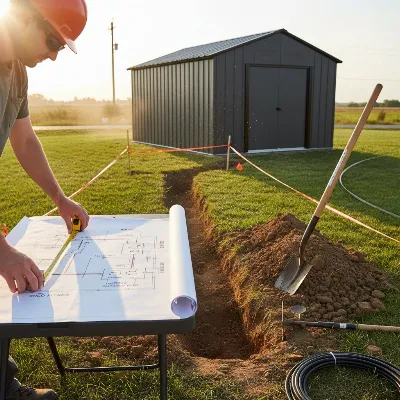 A homeowner planning safe electricity installation to a storage shed, reviewing diagrams and considering underground wiring.
Essential Components for a Safe Shed Electrical Installation
Once your plan is solid, understanding the specific electrical components required for a safe and code-compliant installation is critical.
Connecting to Your Main House Panel
Power to your shed must originate from your home’s main electrical panel. This typically involves installing a new, dedicated circuit breaker. The amperage of this breaker (e.g., 30-amp or 50-amp) must match your calculated power needs for the shed. It’s crucial to ensure your home’s main panel has sufficient capacity to handle the additional load without being overloaded. If your main panel is already near its capacity, you might need an upgrade.
Shed Subpanels and Disconnect Switches
For sheds that require multiple circuits (e.g., separate circuits for lights and outlets) or 240V service for heavy-duty tools, installing a subpanel inside the shed is usually required. A subpanel provides local control over the shed’s electrical system, allowing you to trip a breaker in the shed rather than running back to the house. Crucially, a detached building with a subpanel also needs its own grounding system, typically consisting of two long copper rods driven into the earth. Additionally, a readily accessible disconnect switch must be installed in or near the shed to quickly cut off power in an emergency or during maintenance. This is often integrated into the subpanel itself.
Selecting the Right Wires and Conduit
The type and gauge of wire you use are dictated by your power requirements, the distance to the shed, and the installation method. For underground applications, Underground Feeder (UF-B) cable or individual THWN wires pulled through conduit are common. UF-B cable is designed for direct burial, but conduit (often Schedule 40 PVC for underground or Rigid Metal Conduit for tougher conditions) provides superior protection. Steel Wire Armoured (SWA) cable is a robust choice in many regions, offering excellent protection for outdoor and underground runs. Always choose wires rated for wet locations. The wire gauge (thickness) must be appropriate to prevent voltage drop over long distances and to safely carry the intended current.
Outlets, Switches, and Lighting
All 120V receptacles (outlets) in your shed must be Ground Fault Circuit Interrupter (GFCI) protected. GFCI outlets automatically trip power in the event of a ground fault, drastically reducing the risk of electric shock, especially in damp environments. Any exterior outlets should be weatherproof (WR rated) and equipped with in-use covers to shield them from moisture. For switches and lighting fixtures, use components with an appropriate Ingress Protection (IP) rating, indicating their resistance to dust and moisture. LED fixtures are an excellent choice for sheds due to their energy efficiency, durability, and good performance in varied temperatures. Lighting should be controlled by wall-mounted switches for convenience and safety.
Grounding and Bonding
Proper grounding is a non-negotiable safety feature. It provides a safe path for stray electrical current during a fault, preventing dangerous shocks. If your shed has a subpanel, it must have its own grounding system, typically achieved by driving two copper rods into the earth and bonding them to the subpanel. All metal components, such as conduit and metal boxes, must also be properly bonded to the grounding system.
Step-by-Step Guide to Electrifying Your Shed
While the complexity can vary, here’s a general sequence of steps for running electricity to your shed. For absolute safety and compliance, consulting or hiring a qualified electrician is strongly advised.
Mapping the Route and Preparing the Site
Begin by plotting the shortest, safest, and most practical path from your house’s main panel to the shed. Avoid areas with established trees, large roots, or other obstacles. Before breaking ground for underground wiring, call your local utility services (e.g., “Call Before You Dig” services) to identify any buried utility lines (gas, water, communication) to prevent accidental damage. Mark your chosen route clearly with paint or flags.
Installing Underground Wiring (Trenching and Conduit)
If opting for underground wiring, carefully dig your trench to the depth required by local codes. Ensure the trench is consistently deep and wide enough for your chosen conduit or direct burial cable. Lay the conduit, securing sections together with appropriate fittings and primer/glue for PVC. Limit bends to a total of 360 degrees in any single run to make pulling wires easier. If using direct burial cable, ensure it’s specifically rated for this purpose. Once the cable or conduit is in place, you can carefully backfill the trench, leaving markers if necessary for future reference.
Making Electrical Connections
This is where electrical expertise is most critical. A new circuit breaker is installed in your home’s main panel, sized for your shed’s power needs. Wires are run from this breaker, through your chosen method (underground conduit/cable or overhead), to the shed. Inside the shed, if a subpanel is installed, the main feeder wires connect to it. From the subpanel, individual circuits are then run for lights, outlets, and any dedicated appliances. All connections must be made securely, following strict wiring diagrams and color codes.
Internal Wiring and Fixture Installation
Inside the shed, mount electrical boxes for outlets, switches, and lighting fixtures according to your layout plan. Run appropriate gauge wires to each box. Install GFCI outlets, light switches, and light fixtures. Ensure all connections are tight and all components are properly secured and enclosed. Use IP-rated or weatherproof enclosures for any components exposed to the elements or damp conditions.
Testing and Final Inspections
Once all wiring and connections are complete, but before concealing any wiring within walls or covering trenches, you’ll typically have a rough-in inspection. The inspector will check wire gauges, connection methods, conduit installation, and overall compliance. After successful rough-in, you can finish covering walls and backfilling trenches. A final inspection will be conducted once the entire system is complete, ensuring everything is operational and meets all safety and code requirements. Only after the final approval should you fully energize and use the shed’s electrical system.
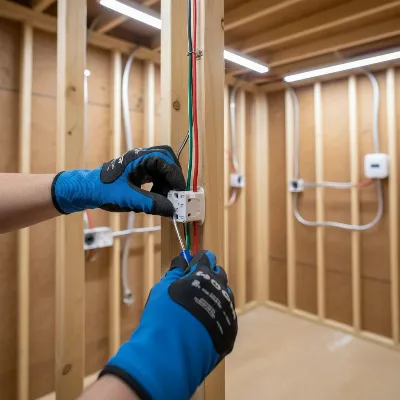 A professional electrician safely installing an electrical outlet with GFCI protection inside a storage shed, focusing on secure wiring.
Prioritizing Safety and Best Practices
Electricity can be dangerous if not handled correctly. Adhering to strict safety guidelines is not just about compliance; it’s about protecting lives and property.
The Value of Professional Expertise
While a detailed guide can empower you with knowledge, performing electrical work, especially installing new circuits and running power outdoors, carries inherent risks. Unless you have extensive experience and a deep understanding of electrical codes, hiring a qualified, licensed electrician is highly recommended. An electrician will ensure all work complies with local codes, calculates loads correctly, selects appropriate materials, and performs safe, reliable installation. In some regions, DIY electrical work might even be restricted by law, requiring a licensed professional for certain tasks.
Critical Safety Measures
- GFCI Protection: As mentioned, all 120V outlets in your shed must have GFCI protection. This is a critical safeguard against electric shock, particularly in damp or outdoor environments.
- Weatherproofing: All outdoor electrical components, including conduit entry points, junction boxes, and exterior outlets, must be weatherproof and rated for outdoor use to protect against moisture intrusion.
- Avoiding Overloading: Never overload circuits by plugging in too many high-wattage devices simultaneously. Plan your circuits carefully, and consider dedicated circuits for heavy-duty equipment.
- Extension Cords: Extension cords are for temporary use only, not a permanent power solution for your shed. Using them long-term can lead to overheating, fire hazards, and damaged equipment. Always use heavy-duty, outdoor-rated cords for short-term tasks.
Maintenance and Regular Checks
Even after a professional installation, regular maintenance and inspections are vital. Periodically check all visible wiring, outlets, and fixtures for any signs of wear, damage, or corrosion. Test GFCI outlets monthly using their test buttons. Look for flickering lights, buzzing sounds, or unusually warm outlets, which can indicate potential issues. Promptly address any problems or concerns, ideally with the help of a qualified electrician.
Enhancing Your Storage Shed with Electricity
Once your shed is safely electrified, the possibilities for its use expand dramatically.
Transforming Your Shed into a Functional Space
With reliable power, your storage shed can evolve far beyond its humble origins. Imagine a fully operational workshop with power tools, bright task lighting, and even climate control for year-round comfort. It could become a quiet home office, separate from the distractions of the main house, complete with computer equipment and internet connectivity. Or perhaps a dedicated art studio, a home gym with exercise equipment, or a vibrant playhouse for children.
Creative Ideas for an Electrified Shed
- Workshop or Studio: Install benches, power tools, overhead lighting, and ventilation fans.
- Home Office: Add outlets for computers, printers, and a mini-split AC/heater for comfort. Consider running data lines for internet.
- Entertainment Hub: Set up a mini-fridge, speakers, and lighting for a backyard retreat.
- Hobby Space: Provide consistent lighting and power for crafting, model building, or other detailed hobbies.
- Gardening Command Center: Power a potting bench with grow lights, small heaters for seedlings, or charging stations for gardening tools.
Conclusion
Running electricity to your storage shed is an investment that significantly enhances its utility and value. While it can seem like a complex undertaking, a meticulous approach to planning, understanding local codes, selecting appropriate components, and prioritizing safety at every step will ensure a successful outcome. Whether you choose to tackle parts of the project yourself or opt for professional installation, never compromise on safety or compliance. With proper execution, your electrified shed will become a versatile, valuable extension of your home, ready to serve whatever purpose you envision. What new possibilities will electricity unlock for your backyard space?
Frequently Asked Questions
Do I need a permit to run electricity to my shed?
Yes, in almost all cases, you will need an electrical permit from your local building department to run permanent electricity to an outbuilding like a shed. Permits ensure the work complies with safety codes and often require inspections at various stages.
Can I use an extension cord to power my shed permanently?
No, extension cords are designed for temporary use only and should never be used as a permanent solution to power a shed. Long-term use of extension cords, especially outdoors, can create significant fire hazards, damage equipment, and lead to electrical shock.
What is GFCI protection and why is it important for shed wiring?
GFCI (Ground Fault Circuit Interrupter) protection automatically shuts off electrical power when it detects a ground fault, which can occur when electricity escapes its intended path. This is crucial in sheds and outdoor environments where dampness increases the risk of electric shock.
What’s the difference between underground and overhead wiring for a shed?
Underground wiring involves burying electrical cables or conduit, offering better protection from weather and a cleaner aesthetic. Overhead wiring runs cables on poles, is generally cheaper and faster, but is more exposed to damage and can be an eyesore.
How deep do I need to bury electrical cable to my shed?
The required burial depth for electrical cable or conduit to a shed varies by local electrical codes and the type of cable/conduit used. Generally, depths range from 12 to 24 inches (or 450-600mm in some regions). Always check with your local building department for specific requirements.
